

The Future of Software Engineering in the Age of AI: What You Need to Know
Software engineering is undergoing one of the most transformative shifts in its history. Artificial Intelligence (AI) is no longer a buzzword—it’s now actively shaping how software is designed, developed, tested, deployed, and maintained. If you’re a developer, a computer science student, a tech entrepreneur, or simply curious about how code is created in the modern world, understanding how AI is changing the software engineering landscape is essential.The Future of Software Engineering in the Age of AI: What You Need to Know.
The Evolution of Software Development Through AI Tools
AI has changed how developers write code and how software projects evolve from concept to production. Instead of starting every project from scratch, developers today rely on AI-powered code completion, automated testing frameworks, intelligent debugging tools, and cloud-based AI development environments.
The Future of Software Engineering in the Age of AI: What You Need to Know. Traditional software engineering workflows often required repetitive manual tasks. Now, AI tools like GitHub Copilot, OpenAI Codex, Tebnine, and Code Whisperer assist developers in generating boilerplate code, refactoring functions, and even recommending optimal architectural patterns. As a result, development cycles have become faster and more accurate.
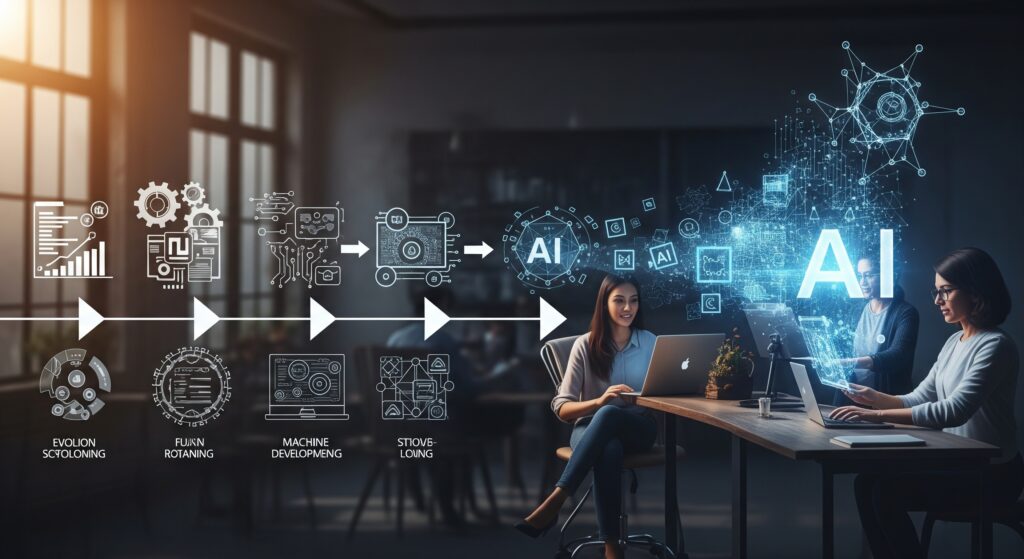
At the same time, this shift doesn’t eliminate the need for human input. Rather, it enhances human creativity. Developers now focus more on problem-solving, user experience design, and system architecture instead of getting bogged down in repetitive code writing.
How AI is Reshaping Software Architecture and Design
One of the most exciting changes is how AI influences the way we structure applications. Whether you’re working on microservices, serverless computing, containerized environments, or event-driven systems, AI can analyze historical project data and recommend scalable and fault-tolerant architectural models.
AI tools analyze performance metrics, traffic patterns, and system logs to propose real-time design optimizations. Consequently, developers are better equipped to create systems that can scale seamlessly under varying loads.
Moreover, AI can simulate different deployment strategies like canary releases, blue-green deployments, or feature toggles to predict their impact. This allows engineering teams to make smarter, data-backed decisions before going live.
The Role of AI in Code Review and Quality Assurance
Testing and quality assurance (QA) have long been a bottleneck in the software development lifecycle. However, AI-powered testing tools can now automatically generate unit tests, integration tests, and regression test cases based on the logic within the codebase.
Furthermore, machine learning models detect code smells, security vulnerabilities, and even compliance issues before they reach production. Whether you’re working with Java, Python, JavaScript, or newer frameworks like Rust or Kotlin, AI tools offer real-time suggestions during the commit phase.
In many development pipelines, AI is also integrated with Continuous Integration/Continuous Deployment (CI/CD) systems. This ensures faster detection of bugs and continuous monitoring of code quality metrics across development sprints.
Will AI Replace Software Engineers?
The Future of Software Engineering in the Age of AI: What You Need to Know . This is the million-dollar question that everyone keeps asking. While AI is automating many aspects of software engineering, it’s not here to replace developers. Instead, it is amplifying their capabilities.
Software engineers bring a deep understanding of context, business logic, user needs, and ethical considerations—areas where AI still falls short. The best results emerge when humans and machines collaborate.
Think of AI as a co-pilot or intelligent assistant. It can speed up tasks, eliminate errors, and handle repetitive coding jobs, but it lacks the nuanced judgment that developers bring to the table. So, in essence, AI augments engineering rather than replacing it.
AI and the Future of Programming Languages
Programming languages themselves are evolving to accommodate AI-driven workflows. Languages that integrate well with machine learning and data science libraries—like Python, R, and Julia—are rising in popularity. Yet, even traditional languages like C++, Java, and C# are being modernized with AI toolkits and SDKs.
We are also witnessing the emergence of AI-friendly frameworks such as TensorFlow, PyTorch, Hugging Face, and ONNX. Developers can now integrate machine learning models directly into mobile apps, backend services, and even embedded systems.
With the rise of no-code and low-code platforms, AI-generated code snippets are helping non-programmers build web applications, chatbots, and automation scripts without deep technical knowledge. However, for advanced systems, skilled software engineers remain indispensable.
Data-Driven Development: A New Norm
In modern software engineering, data is a critical asset. With AI, development teams now analyze logs, API traffic, user behavior, and error rates to make better design decisions. This data-driven approach helps improve user experience, minimize bugs, and align software goals with business outcomes.
AI models also leverage this data to identify system bottlenecks, recommend refactoring opportunities, and predict scalability issues before they happen. Therefore, embracing a data-first mindset has become vital for long-term software success.
How Machine Learning Is Empowering DevOps and Automation
The Future of Software Engineering in the Age of AI: What You Need to Know. DevOps teams are now integrating machine learning into every layer of the operations pipeline. Whether it’s through intelligent alerting systems, log anomaly detection, or predictive server autoscaling, AI provides operational insights that would otherwise take hours to uncover.
Some popular AI use cases in DevOps include:
- Predicting infrastructure failures before they impact users
- Optimizing cloud resource usage and cost
- Automating release approvals based on test results and user feedback
- Enhancing system observability with anomaly detection tools
By adding AI into DevOps, teams can accelerate product delivery while maintaining stability and resilience across environments.
The Rising Importance of Ethical AI in Software Engineering
As AI becomes more deeply embedded in software systems, ethical engineering takes center stage. Developers must consider fairness, transparency, accountability, and bias in algorithms—especially in sensitive sectors like finance, healthcare, or law enforcement.
Regulatory frameworks like GDPR, CCPA, and the EU AI Act are beginning to set boundaries for AI systems. Software engineers must ensure their applications comply with ethical and legal standards from the ground up. This means documenting training data, providing explainability for models, and ensuring equitable access to technology.
Companies now seek engineers who understand both the power and the responsibility that come with AI-driven development.
AI in Legacy Systems Modernization
Many enterprises still rely on legacy applications built decades ago. AI is playing a pivotal role in helping teams modernize these outdated systems. By analyzing old codebases, AI tools can identify reusable components, recommend APIs for migration, and automatically refactor code into modern languages and architectures.
For example, AI-driven code translators can convert COBOL or FORTRAN code into more maintainable languages like Java or C#. In addition, AI assists with database migration, security patching, and integration with cloud-native platforms.
As a result, businesses are cutting costs, reducing downtime, and unlocking new capabilities by transforming legacy software with the help of AI.
AI and Continuous Learning in Software Engineering
In the age of AI, continuous learning is no longer optional—it’s a necessity. Engineers must stay current with evolving tools, libraries, frameworks, and machine learning models. Online courses, coding bootcamps, and microlearning platforms are increasingly incorporating AI-related modules to keep developers up to date.
Beyond technical skills, developers also need to hone soft skills like critical thinking, cross-team collaboration, and ethical reasoning. As AI handles more of the technical grunt work, human creativity and empathy are becoming key differentiators.
So, whether you’re just starting your programming journey or are a senior developer leading teams, embracing a mindset of lifelong learning is crucial to future success.
Top AI Tools and Platforms for Software Engineers
Software engineers now have access to a broad ecosystem of AI-enhanced tools that support every phase of the software development life cycle. These include:
- GitHub Copilot: AI pair programmer for autocomplete and suggestions
- DeepCode: AI code review and quality insights
- Replit Ghostwriter: Real-time code generation in a browser IDE
- Kite: AI-based autocomplete for Python developers
- Snyk & SonarQube: Security and quality assurance tools with ML capabilities
- Jenkins with ML plugins: AI-driven CI/CD automation
- AWS CodeGuru: AI code reviewer and performance analyzer
Each of these tools is designed to improve code reliability, accelerate development speed, and reduce errors.
Preparing for the AI-Driven Software Engineering Job Market
With AI adoption rising, hiring trends in software engineering are also evolving. Employers now value developers who can integrate AI APIs, design intelligent systems, and think critically about model behavior. Roles such as AI software engineer, machine learning engineer, prompt engineer, and DevOps automation specialist are in high demand.
To stay competitive, it’s vital to:
- Master cloud platforms like AWS, GCP, or Azure
- Learn Python, JavaScript, and AI libraries such as Scikit-learn, TensorFlow, or Transformers
- Gain familiarity with APIs, RESTful services, and distributed computing
- Build a portfolio of AI-driven projects, even if small or experimental
Internships, open-source contributions, and hackathons can also help showcase your skills in real-world scenarios.
Final Thoughts: Human Ingenuity Still Matters
Although AI is reshaping the entire software development ecosystem, human ingenuity still matters more than ever. The tools are powerful, but the ideas, empathy, and ethics come from you. If you embrace these changes and learn to work alongside AI, your potential as a software engineer is limitless.
From improving development speed to enhancing decision-making, AI is revolutionizing how software gets built. However, the future of software engineering remains a human story—one powered by collaboration, curiosity, and continual growth.
For more insights, visit the ClayDesk Blog: https://blog.claydesk.com