What is Role of AI in Cybersecurity?
Introduction: The Growing Role of AI in Cybersecurity
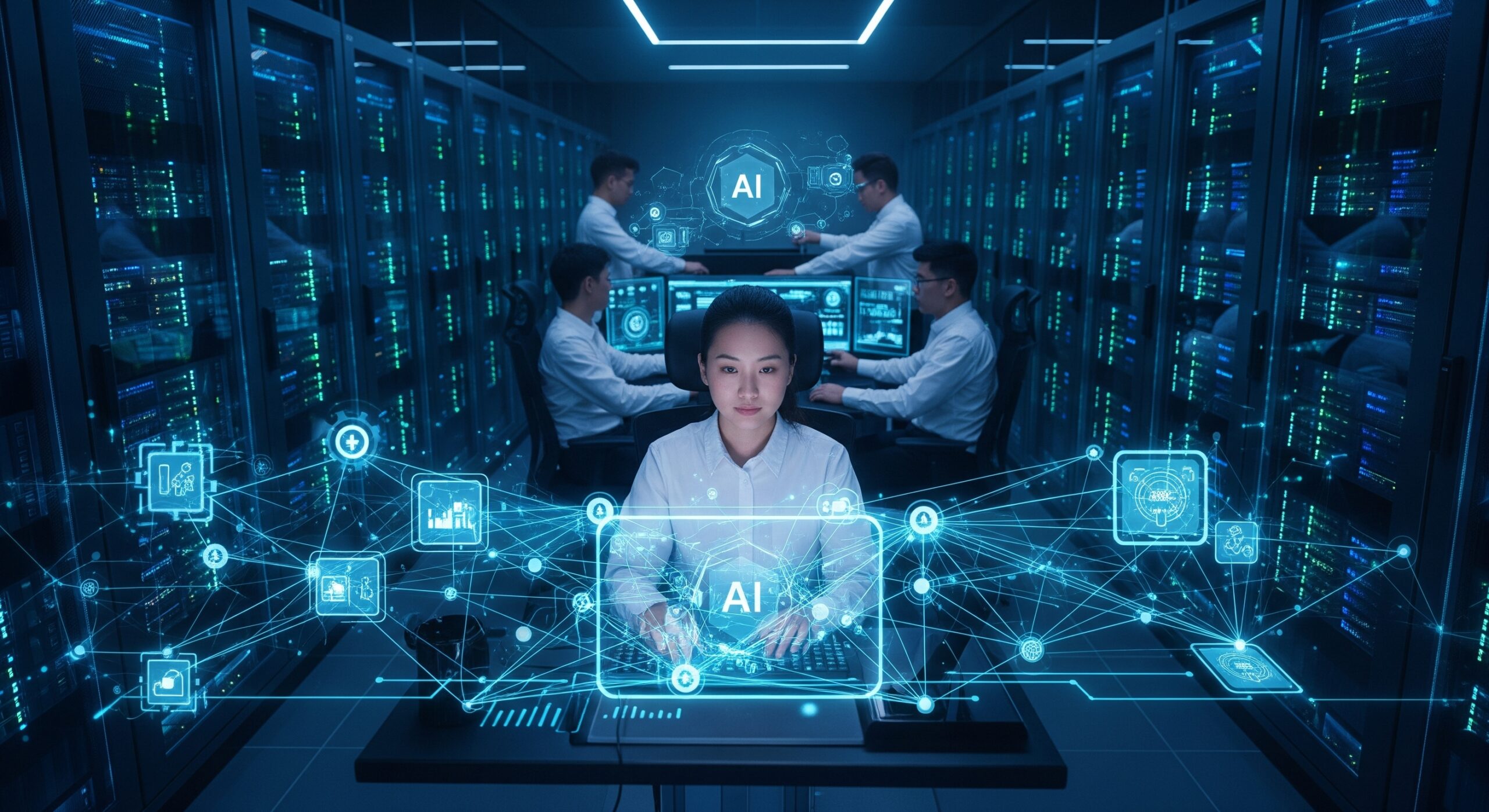
What is Role of AI in Cybersecurity? Cybersecurity has become one of the most pressing concerns for businesses, governments, and individuals worldwide. Cyberattacks are no longer limited to isolated incidents or small-scale breaches. Instead, they have evolved into highly sophisticated and large-scale operations that can cripple organizations and compromise sensitive information. Traditional defense strategies, while still relevant, are proving insufficient against these modern threats.Artificial Intelligence (AI) has emerged as a powerful tool in this fight, revolutionizing how we prevent, detect, and respond to cyber threats. With its ability to analyze massive datasets in real time, detect anomalies, and automate security processes, AI significantly reduces response times while improving accuracy. As cybercriminals adopt advanced tactics, AI ensures that cybersecurity measures remain proactive and adaptive, making it an essential component in today’s digital defense landscape.
Understanding How AI Enhances Cybersecurity Defence
What is Role of AI in Cybersecurity? The role of AI in cybersecurity extends far beyond automation. At its core, AI leverages machine learning (ML), natural language processing (NLP), and advanced analytics to identify patterns and predict potential attacks. Unlike traditional security solutions that react only after an attack occurs, AI-driven systems take a predictive approach.
For example, AI-based algorithms can examine millions of network logs, detect unusual login attempts, and identify patterns of malicious behavior. They continuously learn from these patterns and adapt their detection models, which means they become smarter with each incident. This shift from reactive to proactive defense significantly enhances the ability to neutralize threats before they escalate.
Furthermore, AI integrates seamlessly with modern security infrastructures such as firewalls, intrusion detection systems, endpoint security solutions, and cloud protection tools. By doing so, it creates a unified, intelligent ecosystem that provides real-time situational awareness across an organization’s entire digital footprint.
Real-Time Threat Detection with AI-Driven Security Tools
One of the most powerful applications of AI in cybersecurity lies in its real-time detection capabilities. Cyberattacks often unfold within minutes or even seconds, leaving little time for manual intervention. AI-driven security tools analyze traffic flows, user behaviors, and endpoint activity instantly, flagging potential anomalies that may indicate ongoing attacks.
For instance, when a user account suddenly attempts to access restricted files outside of normal working hours, AI-powered systems immediately raise an alert. If necessary, automated defense mechanisms can isolate the account, block suspicious IP addresses, or shut down compromised processes without waiting for human approval.
What is Role of AI in Cybersecurity? These capabilities are especially crucial for stopping ransomware attacks, phishing campaigns, and zero-day exploits that traditional signature-based systems often miss. By using behavioral analytics and anomaly detection, AI tools can identify even the most subtle indicators of compromise, thereby reducing the window of vulnerability.
Key Applications of AI in Cybersecurity
Automated Threat Detection and Incident Response
Manual threat detection can take hours or even days, especially when dealing with complex attacks across large networks. AI automates this process, drastically reducing response times. By analyzing vast volumes of security logs and correlating data points, AI-powered Security Information and Event Management (SIEM) platforms provide actionable insights instantly.
When integrated with automated incident response (AIR) tools, these systems can take immediate actions, such as quarantining infected devices or blocking malicious email domains, without waiting for manual approval.
Predictive Threat Intelligence and Attack Prevention
What is Role of AI in Cybersecurity? AI’s predictive analytics capability is another game-changer. By analyzing historical attack data, AI models can anticipate the types of attacks most likely to target a specific organization. This foresight allows security teams to implement preemptive measures.
For example, if AI predicts a surge in phishing emails targeting financial institutions, banks can proactively deploy advanced email filters, employee training, and enhanced authentication measures to mitigate risks before they materialize.
Behavior-Based Authentication and Identity Protection
Passwords alone are no longer sufficient to secure user accounts. AI introduces behavior-based authentication techniques that monitor how individuals interact with systems. Factors such as typing speed, device usage patterns, and geolocation data create behavioral profiles unique to each user.
If an access attempt deviates significantly from a user’s profile, AI systems flag it as suspicious, even if the correct credentials were used. This approach prevents credential-stuffing attacks and enhances identity and access management (IAM) strategies.
Malware Analysis and Zero-Day Attack Prevention
AI excels at detecting and analyzing malware, even variants that traditional signature-based antivirus software misses. Machine learning models study malware behavior in sandbox environments, allowing them to identify and block unknown threats before they spread.
Zero-day attacks—exploits targeting previously unknown vulnerabilities—are particularly dangerous. AI-driven systems can identify these threats by spotting abnormal activity patterns, providing critical time to patch vulnerabilities and neutralize attacks.
Insider Threat Detection and Behavioral Monitoring
Not all threats come from outside an organization. Insider threats—whether malicious or accidental—pose significant risks. AI can monitor employee activity, detect unusual access patterns, and identify potential data exfiltration attempts. By analyzing behavior in context, AI reduces false positives and accurately pinpoints genuine insider risks.
Benefits of AI in Cybersecurity
The adoption of AI in cybersecurity offers numerous benefits:
- Improved Accuracy in Threat Detection – AI reduces false positives by understanding normal network behavior and focusing only on genuine threats.
- Faster Response Times – Automated defense actions minimize damage by acting instantly against detected threats.
- Cost Reduction – AI reduces the workload on human analysts, allowing them to focus on high-priority tasks.
- Enhanced Cloud and Endpoint Security – AI extends protection across hybrid IT environments, including cloud platforms and remote endpoints.
- Scalability – AI can handle massive data volumes and adapt effortlessly as networks grow.
Challenges and Risks of Using AI in Cybersecurity
Despite its advantages, AI is not without challenges. One significant risk is adversarial AI—where attackers use AI themselves to bypass defenses or launch automated attacks at scale. Additionally, poorly trained AI models may fail to detect sophisticated threats or generate false alarms, causing alert fatigue for security teams.
Another concern is the reliance on AI without adequate human oversight. While AI automates many tasks, it still requires skilled cybersecurity professionals to validate findings, fine-tune models, and respond to complex incidents. Organizations must also address ethical concerns surrounding AI, such as ensuring that its use complies with data privacy regulations like GDPR and CCPA.
Future Trends: The Evolving Role of AI in Cybersecurity
AI’s role in cybersecurity will continue to grow as threats become more advanced. Some key trends shaping its future include:
- Integration with Generative AI: Attackers may use generative AI to craft hyper-realistic phishing emails or deepfake attacks. Defensive AI must counter these threats by analyzing content authenticity.
- AI-Powered Security Automation: More security operations centers (SOCs) will adopt AI-driven automation to manage alerts, triage incidents, and enforce policies.
- Collaboration with Human Experts: AI will not replace security teams but augment them. Human-AI collaboration will be vital for handling complex attack scenarios.
- Quantum-Resistant Security Measures: AI will help develop cryptographic defenses to safeguard against future quantum computing threats.
As these trends unfold, businesses that invest in AI-driven cybersecurity will stay ahead of attackers and strengthen their digital resilience.
Conclusion: Why AI is Indispensable in Cybersecurity
What is Role of AI in Cybersecurity? AI is not just a tool—it’s becoming the backbone of modern cybersecurity strategies. From predictive threat intelligence to automated incident response, AI enables faster, smarter, and more efficient defense against evolving cyber risks. However, its success depends on responsible deployment, continuous model training, and strong collaboration with human expertise.
Organizations that embrace AI-driven cybersecurity solutions will not only protect their assets more effectively but also create a proactive defense framework capable of adapting to future threats. In an era where cyberattacks are inevitable, AI offers the intelligence and speed necessary to stay ahead of adversaries.
For more insights, visit the ClayDesk Blog: https://blog.claydesk.com