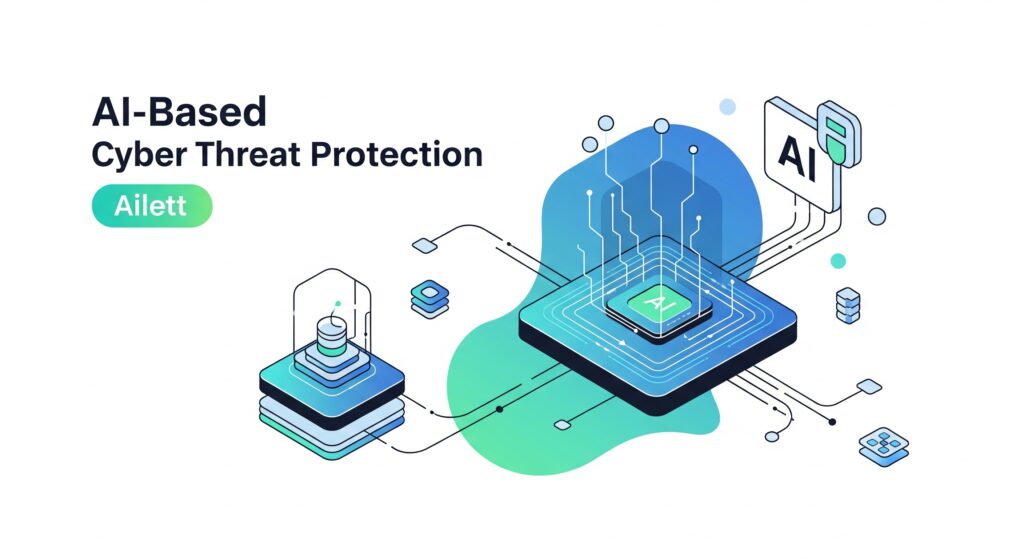
AI-Based Cyber Threat Protection
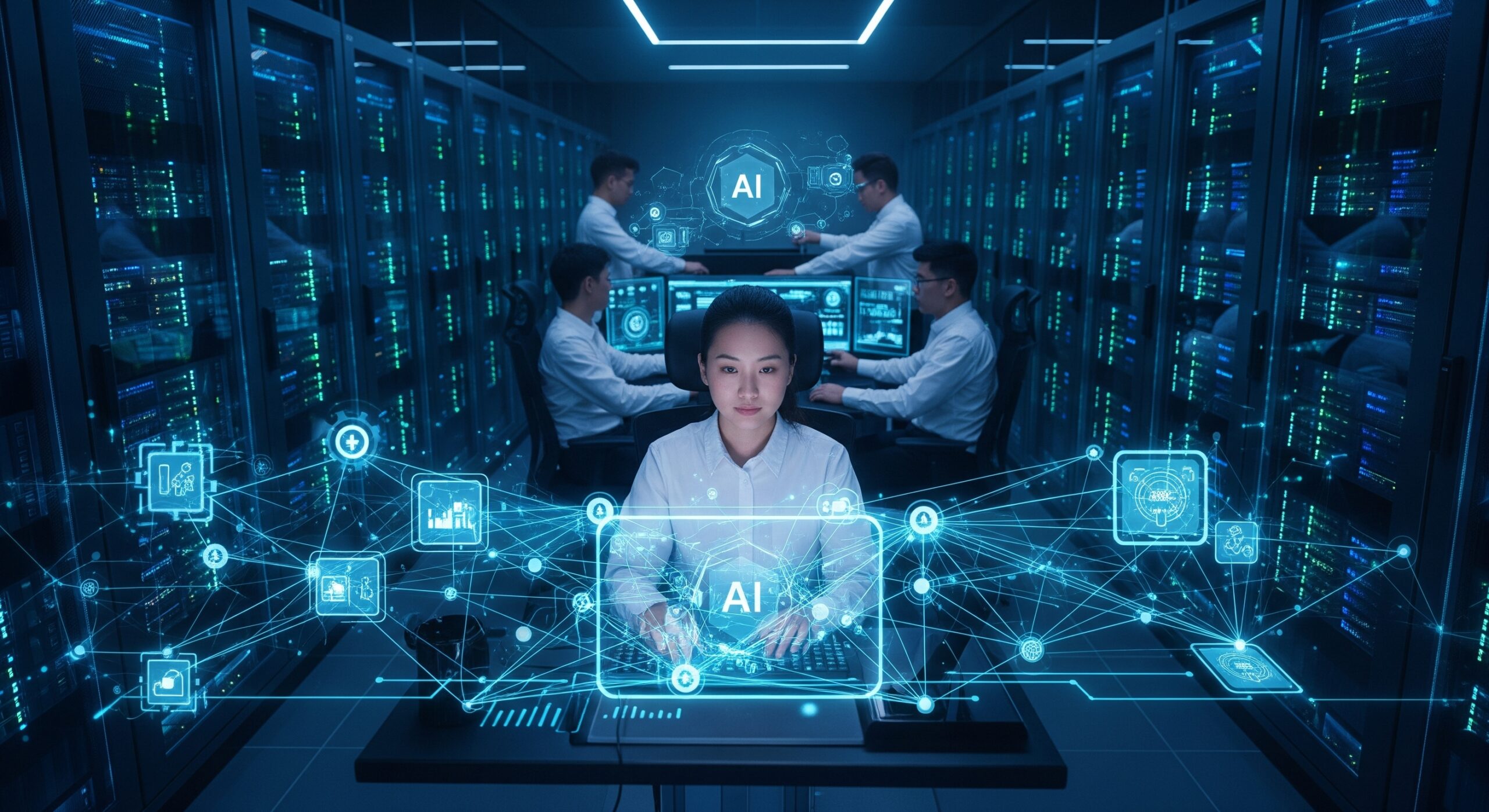
AI-Based Cyber Threat Protection. In today’s hyperconnected world, the digital landscape is evolving faster than ever. With this evolution comes an alarming surge in sophisticated cyberattacks targeting enterprises, governments, and individuals alike. Traditional security measures are no longer enough to combat these threats. Enter Artificial Intelligence (AI) in cybersecurity—a game-changing technology that is transforming the way we detect, prevent, and respond to attacks. Among the most powerful players leading this charge are Darktrace, Cylance, and Vectra AI.
These innovative platforms leverage machine learning-driven cybersecurity solutions, automated threat detection, and real-time anomaly detection systems to protect organizations from advanced persistent threats, ransomware, phishing, zero-day exploits, and insider attacks. But how exactly are they reshaping the industry? Let’s explore how AI is redefining threat detection and response, and why these platforms are revolutionizing digital defense strategies.
Why AI Is Critical in Modern Cybersecurity
AI-Based Cyber Threat Protection. Cyberattacks have grown in scale and sophistication, often bypassing traditional perimeter-based defenses. Conventional rule-based security tools are reactive—they rely on known signatures and predefined rules. But today’s attackers use polymorphic malware, AI-driven phishing campaigns, and living-off-the-land attacks that mutate faster than signature databases can keep up.
AI steps in as a proactive, intelligent solution:
- Behavioral analysis for threats: AI observes and learns normal network behavior, enabling early detection of subtle anomalies that signal intrusions.
- Predictive threat intelligence: AI-driven platforms analyze massive datasets, identifying patterns that hint at emerging attack campaigns before they strike.
- Automated response mechanisms: AI tools can isolate compromised endpoints, halt malicious processes, and remediate threats with minimal human intervention.
- Zero-day exploit mitigation: Unlike signature-based tools, AI-driven systems detect abnormal patterns even when malware is unknown.
By combining machine learning, neural networks, and natural language processing (NLP), AI transforms cybersecurity from reactive to predictive, reducing detection time from weeks to seconds.
Darktrace: The Immune System for the Enterprise
Founded in 2013, Darktrace has quickly become a leader in AI-powered cybersecurity. It uses a self-learning AI model that acts like a “digital immune system,” continuously learning the normal behavior of an organization’s network, users, and devices.
How Darktrace Works
AI-Based Cyber Threat Protection. Darktrace’s Enterprise Immune System leverages unsupervised machine learning algorithms to analyze every device, user, and application across a company’s digital infrastructure, including cloud platforms, IoT devices, and endpoints. When it detects anomalies—such as a suspicious lateral movement, data exfiltration attempt, or unusual login activity—it autonomously responds in real time.
Key features of Darktrace include:
- Antigena Autonomous Response: Instantly neutralizes threats by enforcing “digital antibodies” without human input.
- Continuous behavioral analytics: Learns unique network baselines to spot deviations that signal threats.
- Cloud-native protection: Monitors workloads across AWS, Azure, and hybrid environments.
- Ransomware early detection: Identifies encryption behavior before widespread damage occurs.
- Insider threat monitoring: Flags unusual employee or privileged account activity.
Darktrace’s self-healing AI approach ensures that even if attackers breach the perimeter, they can be detected and contained within seconds.
Cylance: Preventing Attacks with AI-Powered Endpoint Protection
Acquired by BlackBerry in 2019, Cylance is renowned for its AI-driven endpoint security platform that focuses on threat prevention rather than detection alone. Instead of waiting for threats to execute, Cylance predicts and blocks malicious files before they can cause harm.
How Cylance Protects Endpoints
Cylance uses predictive AI models trained on billions of malware samples. This allows it to identify threats based solely on their attributes—without requiring signatures or frequent updates.
Cylance’s core benefits include:
- Proactive malware prevention: Stops known and unknown malware before execution.
- Lightweight AI engine: Uses minimal system resources, making it ideal for remote workforces and BYOD environments.
- Ransomware defense: Detects file encryption behavior and blocks attacks in real time.
- Fileless malware detection: Spots in-memory attacks that bypass traditional antivirus solutions.
- Offline protection: Works without cloud connectivity, securing endpoints in isolated or air-gapped environments.
By replacing reactive signature updates with mathematical AI-driven predictions, Cylance reduces attack surfaces dramatically. Its success in preventing zero-day attacks has made it a popular choice for enterprises embracing next-generation endpoint security.
Vectra AI: Stopping Attacks Through Network Detection and Response (NDR)
Vectra AI specializes in AI-driven network detection and response (NDR), focusing on spotting hidden attackers operating inside the network. Unlike endpoint-only tools, Vectra monitors network traffic patterns, detecting command-and-control communication, lateral movement, and data exfiltration attempts that signal a breach in progress.
Vectra AI’s Approach to Threat Hunting
AI-Based Cyber Threat Protection. Vectra’s platform combines deep learning algorithms and real-time traffic analysis to deliver actionable security insights. It maps out attacker behaviors across the cyber kill chain, allowing security teams to prioritize and remediate high-risk threats faster.
Notable features include:
- AI-driven threat prioritization: Scores and ranks threats to reduce alert fatigue.
- Cloud and SaaS monitoring: Secures workloads in AWS, Microsoft 365, and Google Workspace.
- Lateral movement detection: Identifies compromised accounts attempting to spread inside the network.
- Automated forensic investigation: Reduces incident response time with detailed context for each alert.
- Integration with SOC tools: Works seamlessly with SIEM and SOAR platforms for automated workflows.
With its focus on detecting attacker behaviors, Vectra AI bridges the gap between threat detection and response, equipping security operations centers (SOCs) with actionable insights and reducing dwell time dramatically.
Comparing Darktrace, Cylance, and Vectra AI
While all three platforms leverage AI, their approaches to threat detection and response differ significantly:
| Feature | Darktrace | Cylance | Vectra AI |
|---|---|---|---|
| Focus Area | Network-wide anomaly detection | Endpoint prevention | Network detection & response |
| AI Model | Self-learning AI (unsupervised) | Predictive AI (supervised) | Deep learning threat models |
| Key Strength | Autonomous response (Antigena) | Pre-execution malware prevention | Detecting stealthy attacker behaviors |
| Ideal Use Case | Cloud, IoT, hybrid networks | Enterprise endpoints and remote devices | SOC threat hunting and lateral movement detection |
Organizations often adopt a layered defense strategy, combining these tools for comprehensive AI-driven cybersecurity.
Real-World Impact: Case Studies
AI-Based Cyber Threat Protection. AI-driven platforms like Darktrace, Cylance, and Vectra AI are not theoretical—they are actively stopping cyberattacks in real-world scenarios:
- Darktrace: Detected and contained a ransomware attack in under 60 seconds at a global manufacturing firm, preventing $5M in losses.
- Cylance: Blocked a zero-day fileless malware campaign targeting a healthcare provider’s endpoints, safeguarding patient data.
- Vectra AI: Identified insider data exfiltration in a financial institution by spotting unusual encrypted outbound traffic.
These examples showcase how AI drastically reduces dwell time, minimizes human workload, and prevents catastrophic breaches.
The Future of AI in Threat Detection
As cybercriminals increasingly deploy AI to automate phishing, craft deepfake attacks, and bypass defenses, security tools must evolve faster. Future AI-driven cybersecurity will integrate:
- Generative AI threat modeling to simulate attacks and build resilient defenses.
- Adaptive learning algorithms that evolve with organizational changes in real time.
- Quantum-safe AI encryption techniques for post-quantum cybersecurity.
- Hyperautomation in SOC operations to reduce human fatigue and scale incident response.
In the coming years, AI will not only detect and prevent attacks but also predict them—ushering in an era of autonomous cybersecurity ecosystems.
Final Thoughts: Why Businesses Need AI-Driven Threat Detection Now
AI-Based Cyber Threat Protection. With attack surfaces expanding through remote work, cloud adoption, and IoT, AI in cybersecurity is no longer optional—it’s essential. Darktrace, Cylance, and Vectra AI exemplify how AI-first security platforms detect subtle anomalies, predict threats before execution, and automate response with unprecedented speed and accuracy.
Enterprises embracing AI-powered threat detection are not just defending themselves from today’s attacks—they are future-proofing against the evolving cyber risks of tomorrow.
For more insights, visit the ClayDesk Blog: https://blog.claydesk.com