
Mastering Team Dynamics: Understanding the 5 Key Stages of Team Development
Team Development
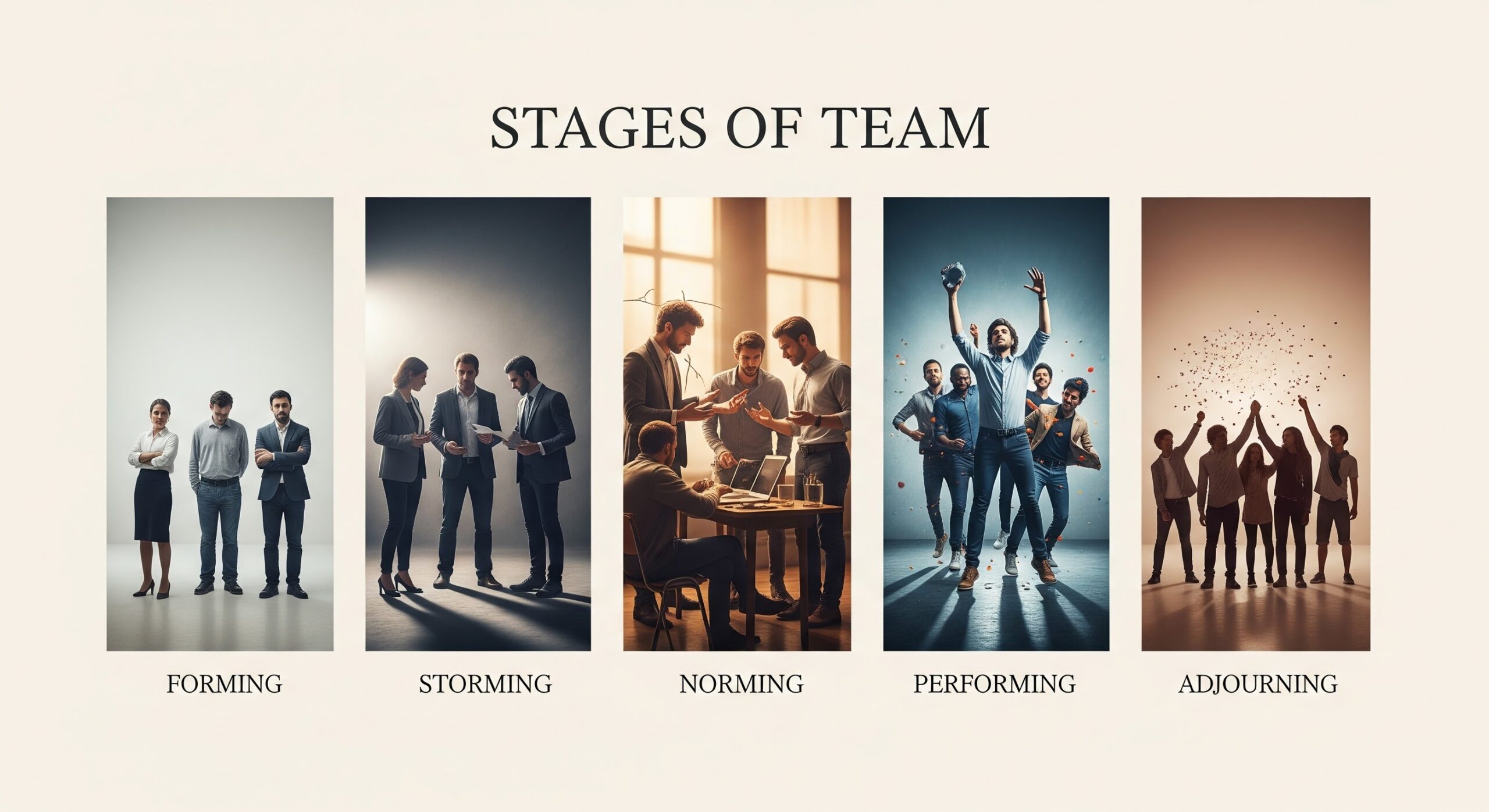
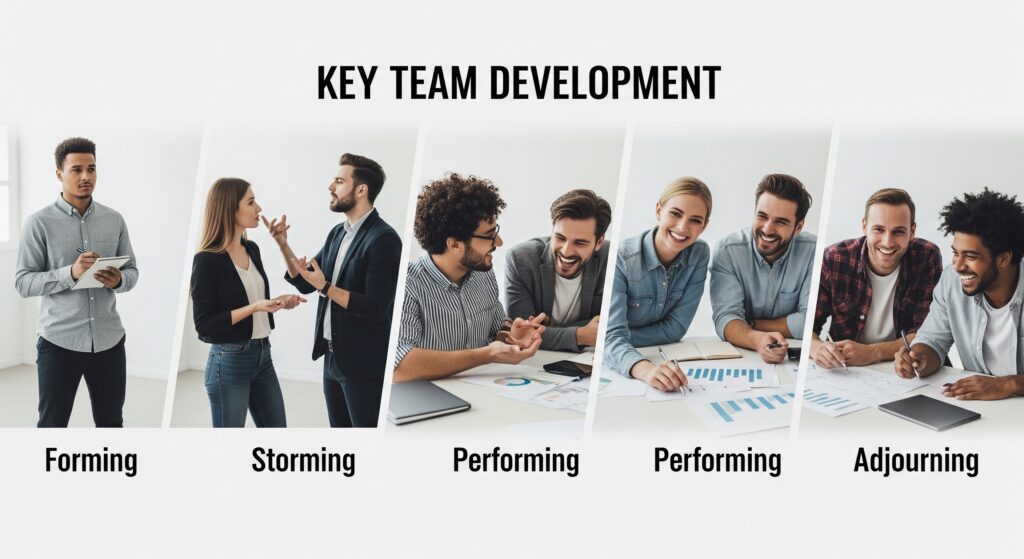
5 Key Stages of Team Development. Every great achievement in the corporate world, every innovative product launch, and every successful project is the result of a cohesive and effective team. However, assembling a group of talented individuals does not automatically guarantee success. A team’s journey from a collection of strangers to a unified, high-performing unit is a complex and often unpredictable process. It is a path filled with uncertainty, conflict, and eventual collaboration. Understanding this journey, and the distinct phases it involves, is an absolutely essential skill for any manager or leader aiming to build and sustain a successful team. The most widely recognized and influential model for this journey is the 5-stage theory of group development, originally proposed by psychologist Bruce Tuckman. This comprehensive guide will meticulously explore each of these five critical stages, providing you with the knowledge and practical strategies needed to navigate your team through every phase of its evolution. Indeed, mastering these stages is the key to unlocking your team’s full potential and ensuring its long-term success.
Stage 1: The Forming Stage
The team’s journey begins in the Forming stage. This is the initial phase where individuals are introduced to one another and to the project. It is a period characterized by a polite, cautious, and often reserved atmosphere. Team members are typically on their best behavior, eager to make a good first impression. They are still figuring out their place in the group and are uncertain about the roles and expectations. Consequently, a great deal of the team’s energy is spent on orientation rather than on the task at hand. This is a crucial time for a manager to establish a clear and guiding presence.
Characteristics of the Forming Stage
In this nascent phase, individuals often feel a mix of excitement and anxiety. They are enthusiastic about the new project but are also uncertain about the personalities of their new colleagues. Conversations tend to be surface-level and professional. Team members are testing the waters, trying to understand the group’s social norms without overtly challenging anyone. They look to the leader for direction, guidance, and clarification. There is a general desire for a sense of belonging and acceptance. As a result, disagreements are rare and often avoided. The focus is on gathering information about the project, the team’s purpose, and the leader’s expectations. A person observing a team in the Forming stage will notice a polite atmosphere, where everyone is trying to find their footing. This initial phase is a critical time for building the foundation of a shared understanding.
The Manager’s Role in Forming
5 Key Stages of Team Development. For a manager, the Forming stage is a time for clear, deliberate action. Your primary goal is to provide a solid framework for the team’s future success. You must clearly define the team’s mission, its ultimate purpose, and the specific goals it is expected to achieve. You should outline each team member’s role and responsibilities, ensuring that there is no ambiguity about their individual contributions. Furthermore, you should establish ground rules for communication and collaboration. This can include setting expectations for meeting etiquette, conflict resolution, and decision-making processes. A manager must act as a central hub of information, answering questions and providing clarity on the project scope and timeline. By providing this strong foundation, you give the team the security it needs to move forward. This initial guidance is vital for effective team building and for setting a positive tone for the entire project. The use of team charter documents and structured onboarding sessions can be particularly helpful at this stage.
Stage 2: The Storming Stage
Following the initial politeness of the Forming stage, the team inevitably enters the Storming stage. This is a phase that is often misunderstood and can be a source of discomfort for managers. It is a period of conflict, power struggles, and clashing personalities. The initial cautiousness gives way to more direct communication, as team members begin to voice their opinions, challenge authority, and vie for influence. This stage is a natural and necessary part of the team’s evolution.
Characteristics of the Storming Stage
5 Key Stages of Team Development. In the Storming stage, the gloves come off. Disagreements, which were previously avoided, now surface as team members begin to assert their individuality. There may be friction over work processes, differing ideas about how to approach a task, and even personal resentments. Cliques may form, and individuals may challenge the leader’s authority or the team’s established goals. This can be a very messy and emotional time for a team. However, it is a crucial period for growth. It is during this phase that the team begins to truly understand its dynamics and confront its differences. The team is essentially arguing its way to a new, more realistic understanding of how it will operate. A manager who is afraid of conflict and tries to suppress these disagreements is doing the team a disservice. Instead, this conflict should be seen as a sign of progress toward a more authentic level of communication.
The Manager’s Role in Storming
For a manager, navigating the Storming stage requires a great deal of emotional intelligence and patience. Your role is not to suppress the conflict but to facilitate its healthy expression. You must act as a mediator, providing a safe and constructive space for disagreements to be aired. You should encourage active listening and help team members reframe their arguments to be about the problem, not the person. It is vital to remind the team of its shared goals and to help them find a middle ground. Furthermore, you should not shy away from confronting difficult conversations. You may need to directly address power struggles or interpersonal conflicts. By guiding the team through this turbulent phase, you help them build resilience and learn to trust one another. This proactive management of conflict is a hallmark of a leader who understands advanced team dynamics. The use of non-violent communication techniques and structured conflict resolution frameworks can be invaluable during this period.
Stage 3: The Norming Stage
If the team successfully navigates the conflicts of the Storming stage, it will enter the Norming stage. This is a period of increased collaboration, trust, and mutual respect. The team has resolved its internal conflicts and has now established a new set of operating norms. A sense of cohesion and unity begins to emerge. Team members start to listen to one another more effectively and are more willing to compromise for the good of the group.
Characteristics of the Norming Stage
.In the Norming stage, the team begins to feel like a cohesive unit. The conflict of the previous stage has been resolved, and a new sense of harmony takes its place. Team members have a better understanding of each other’s strengths and weaknesses, and they are more comfortable with their roles. They begin to hold one another accountable in a supportive way. Decision-making becomes easier as the team has established a set of unwritten rules for how it will operate. This is a time for celebration of small successes and for building a shared sense of identity. A person observing a team in this stage will notice a positive and collaborative atmosphere. This is the calm before the storm of high performance. This phase is crucial for establishing the psychological safety that will allow the team to truly excel.
The Manager’s Role in Norming
For a manager, the Norming stage is a time to reinforce positive behaviors and create a strong sense of unity. Your role is to shift from a mediator to a facilitator. You should encourage a collaborative environment by celebrating team successes and reinforcing the positive changes in communication. It is also important to formally or informally codify the norms that the team has adopted. By acknowledging the new operating procedures, you make them feel more official and therefore more likely to stick. You should also continue to foster an environment of psychological safety, where team members feel comfortable taking risks and making mistakes. This is the time for team-building activities that reinforce a shared sense of purpose and identity. A manager who understands this stage will actively encourage cohesion and collaboration to build a strong foundation for the next phase.
Stage 4: The Performing Stage
5 Key Stages of Team Development. The Performing stage is the pinnacle of team development. This is the period of high productivity, autonomy, and mutual accountability. The team has evolved from a group of individuals into a powerful, self-sufficient unit. The focus is no longer on internal dynamics but on achieving the project’s goals with efficiency and excellence. This is the stage that every manager strives to reach.
Characteristics of the Performing Stage
In the Performing stage, the team is operating at its highest level. Communication is open, honest, and direct. The team is able to resolve conflicts quickly and constructively, often without the need for a manager’s intervention. Roles and responsibilities are clear, and everyone understands their contribution to the overall goal. The team is also highly adaptable and resilient, capable of handling unexpected challenges with grace and creativity. There is a strong sense of mutual trust and respect. Team members are not only committed to the project but also to one another’s success. A manager observing a team in the Performing stage will notice a high degree of autonomy and a powerful sense of collective purpose. This is a time of incredible achievement and innovation.
The Manager’s Role in Performing
For a manager, the Performing stage is a time to step back and trust the team. Your role is to shift from a leader to a facilitator. You should empower the team to make its own decisions and to manage its own processes. Your primary responsibility is to remove any obstacles that may be hindering the team’s progress, whether they are resource constraints or bureaucratic red tape. You should also continue to provide praise and recognition for the team’s accomplishments. A manager who understands this stage will actively promote team empowerment and encourage autonomous working. This is the time to trust in the team’s ability to self-organize and self-manage. It is a rewarding stage for both the team and the leader.
Stage 5: The Adjourning Stage
The final stage of Tuckman’s model is the Adjourning stage. This phase occurs when a project is completed or a team is disbanded. It is a period of both celebration and emotional closure. While often overlooked, this stage is just as important as the others for a healthy team dynamic and for preserving knowledge for future projects.
Characteristics of the Adjourning Stage
The Adjourning stage is marked by the team’s transition from a working unit to a group of individuals. There may be a sense of accomplishment and pride in a job well done. However, there may also be a feeling of sadness or loss as team members prepare to part ways. This can be a very emotional time, especially for teams that have worked together for a long time. The team’s focus shifts from the project’s tasks to a reflection on its journey. A person observing a team in this stage will notice a mix of emotions, from pride to nostalgia. This is a time for looking back and celebrating the journey.
The Manager’s Role in Adjourning
For a manager, the Adjourning stage is a time for celebration, reflection, and closure. Your role is to formally acknowledge the team’s accomplishments and to celebrate its success. This can be done through a team dinner, a formal presentation, or a simple get-together. You should also create a space for the team to reflect on its journey. Ask questions about what went well, what could have been better, and what lessons were learned. This process of team debriefing is crucial for preserving knowledge and for ensuring that the lessons learned are not lost. Furthermore, you should provide a sense of emotional closure. Thank each team member for their contributions and wish them well in their future endeavors. This thoughtful approach to the end of a project shows respect for the team and for the journey it has been on. It is a critical step for successful project closure and for preparing team members for their next role.
Navigating the Stages: Modern Applications and Challenges
5 Key Stages of Team Development. While Tuckman’s model provides a powerful roadmap for team development, its application in the modern workplace is not always linear or straightforward. Understanding these nuances is key to truly mastering team dynamics.
The Non-Linear Nature of Team Development
One of the most important things to understand about Tuckman’s model is that team development is not a one-way street. A team can, and often will, regress to an earlier stage. This can happen for a variety of reasons. For example, the introduction of a new team member can cause a high-performing team to revert to the Forming and even Storming stages as the new member finds their place and challenges the existing norms. Similarly, a significant change in the project scope or a major setback can cause a team to regress to the Storming stage as conflict and uncertainty re-emerge. A manager who understands this will not be surprised by these setbacks. Instead, they will be prepared to guide the team back to a more productive stage. A resilient team is one that can navigate these regressions with grace and speed.
Applying Tuckman’s Model to Remote Teams
In the era of remote work, applying Tuckman’s model presents unique challenges. The lack of face-to-face interaction can make it difficult to build trust and a sense of cohesion in the early stages. For example, the polite and cautious interactions of the Forming stage may be even more pronounced in a virtual setting. Similarly, the conflicts of the Storming stage may be harder to detect and resolve in a virtual environment. However, the model is still highly relevant. A manager of a virtual team must be more deliberate in their actions. They must use technology to create a sense of presence and to facilitate open communication. They should schedule regular check-ins, use video conferencing to build rapport, and use digital tools for conflict resolution. Mastering remote team dynamics requires a manager to be more intentional about fostering cohesion and trust.
The Role of Leadership: Beyond the Stages
While understanding Tuckman’s model is crucial, effective leadership goes beyond simply guiding a team through each stage. It requires a commitment to cultivating a positive team culture and to developing a set of core leadership skills.
Cultivating Emotional Intelligence
A great leader is a person who has a high degree of emotional intelligence. They are self-aware, able to understand their own emotions and how they impact the team. They are also empathetic, able to understand and share the feelings of their team members. A leader who is emotionally intelligent will be better equipped to navigate the conflicts of the Storming stage and to build the trust and respect that are essential for the Norming and Performing stages. This type of leader will also be more effective at providing meaningful feedback and at creating a supportive environment. The development of leadership skills is an ongoing process, and emotional intelligence is a key component.
Building a Culture of Trust and Psychological Safety
The foundation of a high-performing team is a culture of trust and psychological safety. This is a culture where team members feel safe to take risks, to voice their opinions, and to make mistakes without fear of punishment or ridicule. A manager who understands this will actively promote this culture by being open about their own mistakes, by encouraging open communication, and by celebrating failure as a learning opportunity. This culture of trust is what allows a team to move through the stages of development with greater speed and resilience. It is what allows a team to truly excel. A leader who is committed to building psychological safety in teams is building a foundation for sustainable success.
Practical Strategies for Each Stage
5 Key Stages of Team Development. Understanding the theory is one thing, but applying it in a practical way is another. Here are some actionable strategies for managers to use in each stage of team development.
Tools and Techniques for Forming
In the Forming stage, your primary goal is to provide a clear and welcoming start. You should use icebreaker activities to help team members get to know one another on a personal level. You should also use a team charter template to formally outline the team’s mission, its goals, and its operating norms. This document serves as a roadmap for the team’s journey. Furthermore, you should use structured onboarding for new team members to ensure they have all the information they need to succeed.
Conflict Resolution in Storming
When conflict inevitably arises in the Storming stage, you must be prepared to handle it. You should use techniques like active listening and non-violent communication to de-escalate disagreements. You should also use a structured conflict resolution framework to guide the team through the process of finding a solution. This can involve sitting down with the conflicting parties and acting as a neutral mediator. Your role is not to choose a winner but to help the team find a mutually agreeable solution.
Reinforcing Norms in the Norming Stage
In the Norming stage, your goal is to reinforce the positive behaviors that the team has adopted. You should use a regular feedback loop to celebrate successes and to provide constructive feedback. You should also use team-building activities that reinforce a shared sense of purpose and identity. This can include anything from a simple team lunch to a more complex volunteer project. These activities help to solidify the bonds between team members and to build a strong team culture.
Empowering High-Performing Teams
In the Performing stage, your role is to step back and let the team work. You should use techniques like delegation and team empowerment to give the team the autonomy it needs to succeed. You should also use a continuous improvement framework to help the team identify areas for growth and to set new, more challenging goals. Your role is to provide resources and to remove any obstacles that may be hindering the team’s progress. This trust and empowerment are what allow a team to truly excel.
Conclusion: The Art and Science of Team Development
5 Key Stages of Team Development. The journey of a team is a complex and fascinating one. It is a process that is both an art and a science, requiring a manager to have a high degree of empathy, a clear strategic vision, and a set of practical skills. By understanding the 5 key stages of team development, a manager can move from simply reacting to team dynamics to proactively shaping them. They can guide a team through the inevitable conflicts of the Storming stage, help them build trust in the Norming stage, and empower them to achieve excellence in the Performing stage. A manager who masters this process is not just a boss; they are a leader who can build resilient, cohesive, and highly effective teams that are capable of achieving great things. This is the ultimate goal of mastering team dynamics and the key to sustained success in any organization.
For more insights, visit the ClayDesk Blog: https://blog.claydesk.com