
Supporting Employees Through Change: Best Practices for Managers
Introduction
Supporting Employees Through Change. In today’s rapidly evolving business landscape, change is the only constant. Organizations frequently implement new technologies, restructure teams, or adjust business strategies to stay competitive. For employees, these transformations can evoke uncertainty, stress, and resistance. How managers guide their teams through these transitions profoundly affects both individual performance and organizational success. Supporting employees effectively during change is not merely a soft skill—it is a strategic necessity.

Effective change management goes beyond processes and policies. It requires empathy, clear communication, and consistent guidance. Managers who excel in supporting employees understand that transitions affect people cognitively and emotionally, and they tailor interventions to meet these multifaceted needs. By employing structured approaches and fostering a culture of engagement, leaders can reduce resistance, enhance morale, and cultivate a workforce that thrives amid transformation. This article explores comprehensive best practices for managers to support employees through change, drawing on theoretical frameworks, real-world examples, and actionable strategies.
Understanding Change and Its Effects on Employees
Change can be incremental, transformational, or disruptive. Regardless of the type, employees often experience emotional and cognitive challenges. Cognitive effects include learning new tasks, understanding revised workflows, and adapting to updated responsibilities. Emotional effects include anxiety, fear, frustration, and uncertainty. The combination can lead to decreased productivity, disengagement, or even attrition if not managed effectively.
For example, the adoption of AI-driven workflow automation in a finance department may optimize operations, but employees might fear job displacement or skill obsolescence. Understanding these emotional and cognitive impacts is essential for managers seeking to mitigate resistance and foster acceptance. Psychological models of change, such as Lewin’s Change Model and Kubler-Ross’s Change Curve, highlight the stages employees experience, from initial shock and denial to eventual adaptation and commitment. Managers who recognize these stages can provide tailored support and guidance.
Best Practices for Supporting Employees During Change
Communicate Transparently and Frequently
Supporting Employees Through Change. Open communication is the cornerstone of effective change management. Employees need clarity about the why, what, and how of organizational changes. Managers must articulate not only the objectives but also the rationale, expected outcomes, and personal impact on employees. Transparency reduces uncertainty, builds trust, and minimizes resistance.
Frequent updates are critical to prevent rumors and misinformation from spreading. In a technology-driven organization adopting a new project management platform, weekly briefings, email updates, and virtual Q&A sessions can provide clarity. Two-way communication is equally important; allowing employees to voice concerns, ask questions, and contribute suggestions strengthens engagement and demonstrates respect for their perspectives.
Involve Employees in the Change Process
Supporting Employees Through Change. Participation enhances ownership. When employees are actively involved in planning and implementation, they are more likely to embrace change. Managers can solicit input through surveys, workshops, focus groups, and collaborative platforms. This not only provides valuable insights but also instills a sense of agency.
For instance, during a departmental restructuring, inviting team members to discuss workflow adjustments or resource allocation helps identify practical solutions while reinforcing employee value. Participation reduces resistance, fosters empowerment, and ensures that solutions are more aligned with on-the-ground realities.
Provide Comprehensive Training and Development
Change often necessitates new skills or modifications to existing workflows. Managers must ensure employees have access to training programs, workshops, mentoring, and on-the-job coaching. Structured skill development not only equips employees to handle new challenges but also reduces anxiety and boosts confidence.
A healthcare organization adopting a predictive analytics system, for example, can provide role-specific training sessions and hands-on simulations. This approach ensures that clinicians and support staff are proficient with the system, fostering adoption and maintaining quality standards.
Recognize and Address Emotional Responses
Change impacts emotions as much as workflows. Acknowledging employee feelings through empathetic communication, active listening, and support mechanisms is vital. Emotional support may include coaching, counseling, peer support networks, or mental health resources.
Consider a scenario in which a company transitions to remote work. Employees may experience isolation, burnout, or technology-related stress. Regular one-on-one check-ins, virtual team-building activities, and access to counseling resources help mitigate negative emotional impacts and maintain engagement and productivity.
Set Clear Expectations and Milestones
Uncertainty often leads to stress and decreased performance. Managers should define clear roles, responsibilities, and expectations during transitions. Breaking down change initiatives into manageable milestones allows employees to navigate the process incrementally rather than feeling overwhelmed.
For instance, when implementing a new customer relationship management (CRM) system, a manager might outline weekly learning goals, provide structured feedback, and celebrate progress. This structured approach reduces ambiguity, reinforces confidence, and sustains momentum.
Foster a Supportive Organizational Culture
Supporting Employees Through Change. A culture emphasizing adaptability, collaboration, and resilience enhances employee capacity to cope with change. Managers play a critical role in modeling positive behaviors, reinforcing organizational values, and encouraging knowledge sharing.
Organizations with robust support systems, such as mentorship programs, peer networks, and recognition platforms, enable employees to thrive even under uncertainty. For example, innovation hubs in technology firms encourage experimentation with new tools and processes, promoting learning and reducing fear of failure.
Monitor Progress and Adapt Strategies
Change management is an iterative process. Managers should continuously evaluate employee engagement, adaptation, and performance metrics. Feedback loops enable proactive adjustments, addressing challenges before they escalate.
If employees struggle to adopt a new analytics tool, for instance, managers can provide supplemental training, assign mentors, or adjust workflows to facilitate smoother integration. Continuous monitoring ensures that support remains effective and responsive rather than reactive.
Leveraging Change Management Frameworks
ADKAR Model
The ADKAR model, consisting of Awareness, Desire, Knowledge, Ability, and Reinforcement, is widely used for managing change. Managers can map support strategies to each element:
- Awareness: Communicate why change is necessary.
- Desire: Motivate employees by aligning change with personal and organizational goals.
- Knowledge: Provide training and resources for skill development.
- Ability: Ensure employees can implement new behaviors effectively.
- Reinforcement: Celebrate success and institutionalize change through recognition and policy adjustments.
Kotter’s 8-Step Model
Kotter’s model emphasizes creating urgency, building coalitions, developing vision, and embedding change into culture. Managers can utilize these steps to systematically support employees, ensuring buy-in and sustainable adoption.
Lewin’s Change Model
Lewin’s three-stage model—Unfreeze, Change, Refreeze—guides managers in preparing employees, implementing transitions, and stabilizing new behaviors. Incorporating employee support strategies in each stage enhances adaptation and retention of change initiatives.
Industry-Specific Examples
Technology Sector
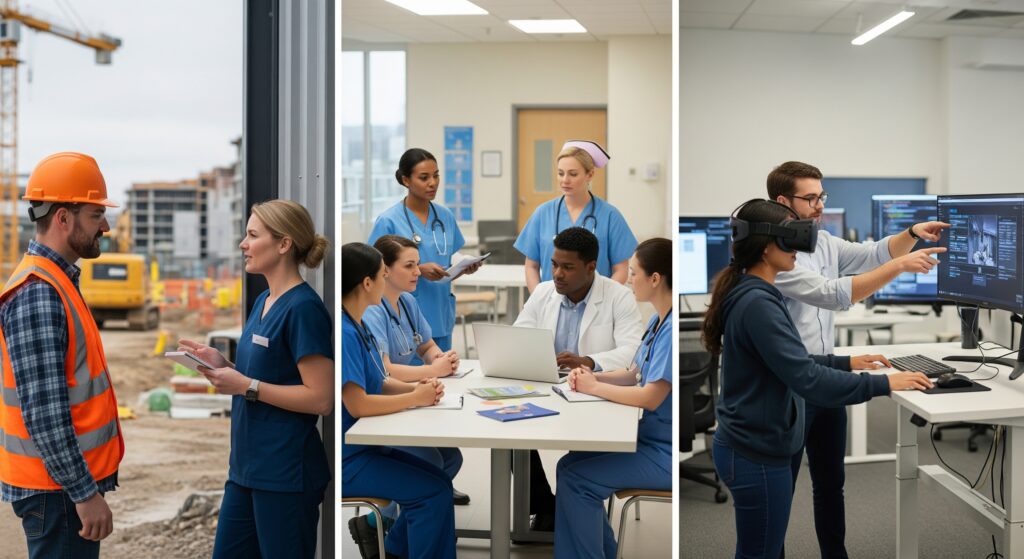
Supporting Employees Through Change. A multinational tech firm introducing AI-driven analytics tools applied transparent communication, iterative training, and pilot testing. Employees participated in beta testing, provided feedback, and received role-specific training. Adoption rates exceeded expectations, and productivity increased by 25% within six months.
Healthcare
Hospitals adopting AI diagnostic platforms conducted small-scale trials, engaged medical staff in feedback sessions, and provided continuous professional development. Emotional support and mentoring were critical in maintaining staff confidence while ensuring patient safety.
Finance
During a restructuring, a financial services firm involved employees in workflow redesign, provided clear role definitions, and offered counseling services. Employee engagement scores increased, and turnover was minimized, maintaining operational stability.
Education
EdTech companies implementing adaptive learning platforms provided teachers with dashboards to monitor student progress. Teachers were involved in refining algorithms, received ongoing training, and participated in peer support networks. Student engagement and learning outcomes improved significantly.
Manufacturing
Smart factories introducing predictive maintenance systems trained technicians in system usage, involved teams in pilot testing, and monitored progress with real-time dashboards. Incremental successes were recognized, fostering acceptance and operational efficiency.
Psychological Aspects of Employee Support
Coping with Stress and Uncertainty
Supporting Employees Through Change. Change can trigger stress responses, impacting decision-making, creativity, and collaboration. Managers who understand psychological principles, such as resilience and emotional intelligence, can implement interventions to support employees’ mental well-being.
Techniques include stress-reduction workshops, access to mindfulness resources, and peer support groups. By acknowledging stress and providing resources, managers help employees navigate transitions more effectively.
Building Resilience
Resilience enables employees to recover from setbacks and adapt to new conditions. Managers can foster resilience through mentorship, skill-building programs, and recognition of adaptive behaviors. Resilient employees are more likely to embrace change and contribute positively to organizational goals.
Motivating Through Change
Intrinsic and extrinsic motivation drives employee engagement during transitions. Managers can leverage intrinsic motivation by aligning change initiatives with personal growth and meaningful work, while extrinsic motivation can include recognition, rewards, and performance incentives.
Technology and Tools to Support Change
Digital tools enhance managers’ capacity to support employees:
- Collaboration Platforms: Tools like Slack or Microsoft Teams facilitate transparent communication and feedback collection.
- Learning Management Systems: Platforms enable continuous training and personalized learning pathways.
- AI-Powered Analytics: Predictive tools monitor employee engagement, identify at-risk individuals, and suggest interventions.
- Virtual Reality Simulations: Immersive training helps employees practice new workflows in safe environments.
For example, a remote-first company leveraged AI analytics to monitor employee engagement during a digital transformation, allowing managers to proactively address challenges and maintain morale.
Metrics and Evaluation
Measuring the effectiveness of employee support during change is critical. Key metrics include:
- Adoption Rates: Extent to which employees use new tools or processes.
- Engagement Scores: Feedback from surveys assessing satisfaction and confidence.
- Productivity Measures: Performance before and after change implementation.
- Retention Rates: Monitoring turnover during and after transitions.
- Feedback and Sentiment Analysis: Using surveys or AI-driven tools to gauge emotional responses.
Managers who track these metrics can make data-driven adjustments to support strategies, ensuring continuous improvement and minimizing negative outcomes.
Overcoming Common Challenges
Resistance to Change
Resistance is natural. Addressing it requires empathy, communication, and involvement. Understanding the root causes—fear, mistrust, skill gaps—enables managers to implement targeted interventions.
Skills Gaps
Training, mentoring, and knowledge-sharing initiatives help bridge skill gaps. Personalized learning ensures employees feel capable and confident in adopting new processes.
Maintaining Morale
Change can affect motivation. Celebrating milestones, recognizing achievements, and fostering team collaboration help sustain morale throughout transitions.
Balancing Speed and Support
While rapid change may be necessary, overwhelming employees can be counterproductive. Managers must balance speed with adequate support, pacing implementation to maximize adoption and minimize stress.
Building a Culture of Continuous Adaptation
Long-term success requires integrating change readiness into organizational culture. Practices include:
- Encouraging experimentation and learning from failure.
- Embedding agility into performance management systems.
- Promoting cross-functional collaboration.
- Recognizing and rewarding adaptive behaviors.
A culture that values flexibility and resilience equips employees to embrace future changes with confidence and optimism.
Future Trends in Supporting Employees Through Change
- AI-Driven Change Management: Predictive analytics identify employees at risk of disengagement.
- Personalized Learning and Development: Adaptive platforms tailor training to individual needs.
- Mental Health Integration: Organizations embed wellness resources into transition planning.
- Remote Work Adaptation: Virtual onboarding, mentoring, and collaboration tools enhance engagement.
- Data-Driven Decision Making: Continuous evaluation and feedback loops guide support strategies.
These trends highlight the importance of proactive, personalized, and technology-enabled approaches for managing change effectively.
Conclusion
Supporting employees through change is a critical managerial responsibility that directly impacts organizational performance. Best practices include transparent communication, employee involvement, training, emotional support, clear expectations, and fostering a supportive culture. Integrating change management frameworks, leveraging technology, monitoring progress, and addressing psychological factors ensures that transitions are smooth, sustainable, and positively received.
Managers who prioritize empathy, guidance, and structured support enable employees to navigate uncertainty confidently, maintain engagement, and adapt successfully to evolving business environments. In an era of continuous transformation, these practices are not optional—they are essential for organizational resilience and success.
For more insights, visit the ClayDesk Blog: https://blog.claydesk.com