

Mastering Claude Sonnet 4: Anthropic’s Advanced AI Model Guide for Beginners
Mastering Claude Sonnet 4
Mastering Claude Sonnet 4. Artificial intelligence has moved from the periphery of technology into the core of innovation. Businesses, developers, and creators are increasingly relying on AI to improve workflows, generate content, and solve complex problems. Among the AI models making waves today, Anthropic’s Claude Sonnet 4 stands out for its combination of safety, reliability, and advanced capabilities. It represents a significant evolution over prior models, offering enhanced reasoning, coding assistance, and creative content generation in a way that is intuitive for beginners and experts alike.
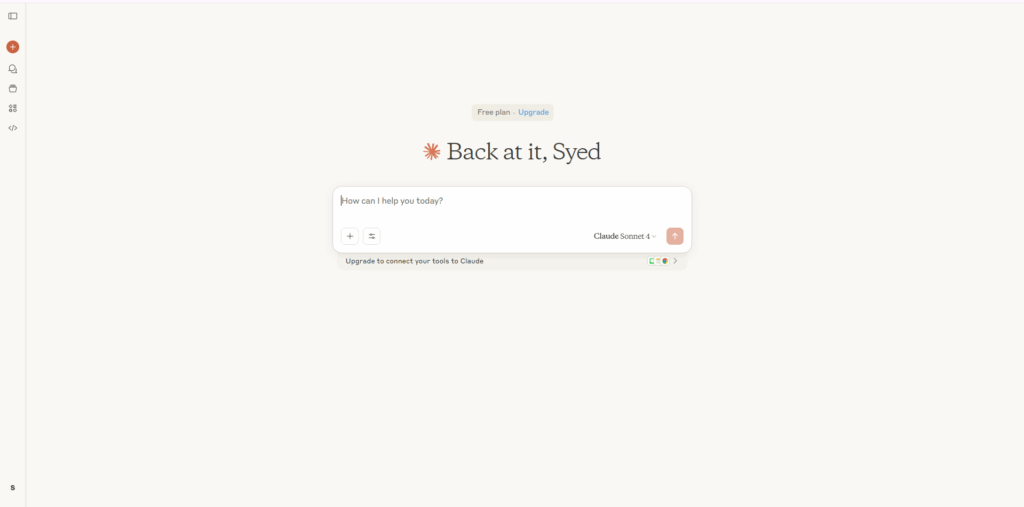
This guide will provide a comprehensive roadmap for mastering Claude Sonnet 4. From understanding its architecture to exploring real-world applications, best practices, and future developments, this article will help you gain confidence in utilizing this advanced AI model to its full potential.
Introduction to Claude Sonnet 4
Claude Sonnet 4 is the latest iteration in Anthropic’s Claude family of AI models. Anthropic has always emphasized safety and interpretability, focusing on creating AI that aligns with human intent. With Claude Sonnet 4, they have improved upon previous generations by expanding the context window, refining reasoning capabilities, and introducing advanced coding and language processing features.
Unlike traditional AI models that may generate text without context, Claude Sonnet 4 maintains coherence over longer interactions. This is particularly useful for developers, content creators, and data analysts who require in-depth answers, multi-step reasoning, or long-form text generation.
Key Features of Claude Sonnet 4
Mastering Claude Sonnet 4. Claude Sonnet 4 brings together several transformative features:
Enhanced Logical Reasoning: Unlike prior models, Claude Sonnet 4 can evaluate complex problems, identify inconsistencies, and suggest logical solutions. For instance, when asked to analyze a multi-step coding problem or solve an algorithmic challenge, it not only provides the solution but explains the reasoning process.
Advanced Coding Assistance: Software developers can use Claude Sonnet 4 as a pair programmer. It can generate code snippets in multiple programming languages, debug existing code, and suggest optimizations. This feature is particularly beneficial for beginners learning to code, as it can provide real-time feedback and explanations.
Context-Aware Responses: Claude Sonnet 4 supports a context window of up to 1 million tokens. This allows the model to remember previous parts of a conversation or document, making it capable of generating coherent outputs even in lengthy interactions or multi-step projects.
Robust Safety Measures: Ethical AI deployment is central to Anthropic’s mission. Claude Sonnet 4 incorporates safety mechanisms to minimize biased or harmful outputs. Its alignment with Constitutional AI principles ensures that responses remain respectful, neutral, and reliable.
Multimodal Capabilities: While primarily text-based, Claude Sonnet 4 is designed to handle complex reasoning tasks that can integrate structured data or other input types, expanding its applicability beyond simple text generation.
Understanding Claude Sonnet 4’s Architecture
The underlying architecture of Claude Sonnet 4 is rooted in the principles of Constitutional AI, a framework designed to create models that adhere to human-aligned guidelines. This approach emphasizes interpretability, transparency, and ethical decision-making.
Core Components of Claude Sonnet 4
Language Understanding Module: This module allows Claude Sonnet 4 to comprehend natural language with high accuracy. It can understand context, detect nuances in phrasing, and generate responses that maintain the intended tone and style.
Reasoning Engine: At the heart of Claude Sonnet 4 lies its reasoning engine, capable of multi-step logical reasoning. Whether it is solving a complex mathematical problem or determining the best approach to optimize an algorithm, this engine evaluates options, identifies potential pitfalls, and delivers well-reasoned outputs.
Safety Layer: The safety layer incorporates content moderation, bias mitigation, and ethical response checks. This ensures that the outputs are aligned with safe AI practices and reduces the risk of producing inappropriate or harmful content.
Memory Management: Claude Sonnet 4 manages large volumes of contextual information efficiently. By tracking long sequences of conversation or documents, it ensures coherence across extended interactions, which is especially valuable for long-form writing, software documentation, and data analysis projects.
Practical Applications of Claude Sonnet 4
Claude Sonnet 4 is a versatile tool suitable for multiple domains. Its applications range from software development and content creation to data analysis and educational assistance.
Software Development and Coding
In the realm of software development, Claude Sonnet 4 acts as a digital assistant, capable of understanding natural language instructions and translating them into functional code. Beginners can benefit from step-by-step coding guidance, while experienced developers can leverage the model to optimize workflows.

For instance, a developer working on a Python application can provide Claude Sonnet 4 with a description of a function they need. The model can generate the code, explain how it works, and even suggest alternative implementations that improve efficiency. Similarly, when debugging code, Claude Sonnet 4 can identify errors, recommend corrections, and provide explanations to aid understanding.
Content Creation and Writing
Mastering Claude Sonnet 4. Writers, bloggers, and marketers can use Claude Sonnet 4 for a variety of content generation tasks. The model can draft articles, assist with editing, generate creative stories, or even help with technical writing. For example, a content creator looking to produce an SEO-optimized blog post can provide the topic, and Claude Sonnet 4 will generate coherent, keyword-rich content, complete with examples and structured arguments.
Additionally, Claude Sonnet 4’s ability to maintain context allows it to generate long-form content without losing focus, making it ideal for eBooks, research papers, and multi-section reports.
Data Analysis and Reporting
Claude Sonnet 4 can analyze large datasets, extract insights, and generate readable summaries. Analysts can input raw data, and the model can identify trends, highlight anomalies, and even produce visual representation suggestions. This capability simplifies the reporting process, saving time while enhancing the quality of analytical outputs.
For example, a marketing team analyzing sales data over several months can feed the dataset into Claude Sonnet 4. The model can identify seasonal patterns, highlight key metrics, and suggest actionable strategies based on the data.
Education and Learning
Students and educators can use Claude Sonnet 4 as a learning companion. The model can explain complex concepts in simple language, provide examples, and offer quizzes or exercises to reinforce learning. Its ability to generate step-by-step explanations makes it especially valuable for subjects like mathematics, programming, and science.
Consider a beginner learning machine learning concepts. By asking Claude Sonnet 4 to explain supervised and unsupervised learning, the student receives detailed explanations, practical examples, and can even request exercises to practice understanding.
How to Get Started with Claude Sonnet 4
To start using Claude Sonnet 4 effectively, follow these steps:
Access the Platform: Sign up on the official Anthropic platform or other authorized platforms hosting Claude Sonnet 4. Ensure your account has the necessary access permissions for the model.
Select the Appropriate Model: Claude Sonnet 4 may have multiple configurations optimized for specific tasks. Choose the configuration that best fits your needs, whether it’s coding assistance, content generation, or data analysis.
Craft Effective Prompts: The key to obtaining accurate outputs lies in crafting well-structured prompts. Providing context, specifying the desired output format, and clearly defining objectives improves response quality.
Analyze and Refine Outputs: Review the model’s outputs carefully. For complex tasks, iteratively refine your prompt based on the responses to achieve optimal results.
Integrate with Tools: Claude Sonnet 4 can be integrated with other tools such as code editors, document processors, and data analytics platforms to streamline workflows.
Best Practices for Using Claude Sonnet 4
While Claude Sonnet 4 is user-friendly, adhering to best practices enhances its utility:
Provide Clear Instructions: Avoid vague prompts. Clearly specify the task, desired format, and constraints to improve accuracy.
Iterative Interaction: Use iterative feedback. If an output is incomplete or partially accurate, refine the prompt or ask follow-up questions to guide the model.
Validate Critical Outputs: Always verify information, especially in critical domains like coding, medical, or legal contexts. Claude Sonnet 4 is powerful but not infallible.
Leverage Examples: Providing examples in your prompt can guide the model to generate outputs that align with your expectations, particularly for creative or technical tasks.
Maintain Ethical Standards: Avoid using the model for generating harmful, misleading, or biased content. Respect safety guidelines and ensure outputs align with ethical standards.
Advanced Techniques for Maximizing Claude Sonnet 4
For experienced users, several techniques can help unlock Claude Sonnet 4’s full potential:
Chain-of-Thought Prompting: Encourage the model to reason step by step, which is especially useful for solving complex mathematical problems or coding challenges.
Few-Shot Learning: Provide a few examples of the desired output in your prompt. Claude Sonnet 4 can generalize from these examples to produce consistent responses.
Iterative Refinement: Break down large tasks into smaller steps and iteratively refine outputs. This approach enhances accuracy and consistency.
Context Preservation: For long projects, maintain contextual continuity by providing relevant historical information from previous interactions.
Task-Specific Optimization: Tailor prompts to specific domains like finance, software development, or creative writing to improve relevance and accuracy.

Ethical Considerations and AI Safety
Anthropic emphasizes responsible AI usage, and Claude Sonnet 4 incorporates several mechanisms to ensure ethical deployment:
Bias Detection: The model is trained to reduce biased outputs, promoting fairness and equity.
Content Moderation: Mechanisms prevent the generation of harmful or inappropriate content.
Transparency and Interpretability: Outputs are designed to be interpretable, helping users understand reasoning behind suggestions.
Alignment with Human Values: Constitutional AI ensures that Claude Sonnet 4’s responses are aligned with user intent and ethical guidelines.
Real-World Examples of Claude Sonnet 4 in Action
Mastering Claude Sonnet 4. Software Development: A startup used Claude Sonnet 4 to accelerate app development. By generating boilerplate code, debugging, and optimizing algorithms, the team reduced development time by 30%.
Content Marketing: A digital marketing agency employed Claude Sonnet 4 to produce SEO-optimized blog posts. The model created engaging content with minimal human editing, increasing website traffic significantly.
Education: An online learning platform integrated Claude Sonnet 4 to provide personalized explanations to students, improving comprehension and engagement.
Data Analysis: A business analytics firm used Claude Sonnet 4 to generate reports from raw datasets. The AI identified trends and provided actionable insights faster than manual analysis.
Future Developments
The evolution of AI models like Claude Sonnet 4 points to an exciting future. Anthropic continues to refine its models, focusing on enhanced reasoning, multimodal capabilities, and seamless integration with enterprise tools.
Future iterations may include stronger contextual memory, improved real-time collaboration features, and more advanced ethical safeguards, making AI tools even more accessible, reliable, and valuable.
Conclusion
Claude Sonnet 4 is a groundbreaking AI model that combines reasoning, coding proficiency, and ethical safeguards in a user-friendly platform. Whether you are a developer, writer, analyst, or student, understanding its capabilities and best practices allows you to leverage AI to solve complex problems and drive innovation. By integrating Claude Sonnet 4 into your workflow, you gain a powerful tool that can assist in software development, content creation, data analysis, and learning, making AI a practical and transformative resource in everyday tasks.
Claude Sonnet 4 is more than just an AI model—it is a bridge between human creativity and computational intelligence, designed to enhance productivity while prioritizing safety and ethical alignment.
For more insights, visit the ClayDesk Blog: https://blog.claydesk.com