

How to Become an AWS Certified AI Cloud Practitioner
Stepping into the world of artificial intelligence (AI) combined with cloud computing is a thrilling journey. Among the many paths you can take, becoming an AWS Certified AI Cloud Practitioner stands out as a rewarding goal. Not only does this certification validate your understanding of AI services within Amazon Web Services (AWS), but it also opens doors to exciting career opportunities in AI software development and cloud architecture. If you’ve been curious about how to get started or advance your career in this booming field, you’re in the right place. This article will guide you through every step to achieve this certification and thrive in the AI cloud domain.
Understanding the Role of an AWS AI Cloud Practitioner
Before diving into the technicalities, it helps to grasp what an AWS AI Cloud Practitioner actually does. Essentially, this role focuses on leveraging AWS’s powerful cloud infrastructure to build, deploy, and manage AI-powered applications. Unlike traditional software roles, practitioners combine cloud knowledge with AI expertise to create scalable solutions that meet business needs.

The AI cloud practitioner must understand machine learning concepts, AWS AI services, and the cloud environment’s security and compliance aspects. This role often acts as a bridge between data scientists, developers, and business stakeholders, ensuring AI projects align with organizational goals while using AWS technologies efficiently. Recognizing this balance is key to preparing for the certification exam and your future job.
Essential Skills to Develop for AWS AI Cloud Certification
Gaining the AWS Certified AI Cloud Practitioner title requires mastering a unique skill set. At the core, you need a solid foundation in cloud computing, particularly AWS’s ecosystem. This includes familiarity with AWS services like SageMaker for machine learning, Rekognition for image analysis, and Lex for conversational AI. Moreover, understanding storage solutions such as S3 and databases like DynamoDB is vital.
Alongside cloud knowledge, you must grasp AI fundamentals. Concepts like supervised and unsupervised learning, neural networks, natural language processing, and computer vision form the backbone of AI applications on AWS. Additionally, being comfortable with Python programming enhances your ability to interact with AI services and automate workflows.
Communication and analytical skills complement your technical abilities. As AI cloud practitioners often translate complex AI models into actionable insights, you must clearly explain technical details to non-experts. Furthermore, analytical thinking helps in designing effective AI models and troubleshooting cloud infrastructure issues.
Mapping Your Learning Path to Certification Success
Charting an effective learning path is crucial to becoming an AWS AI Cloud Practitioner. Start by exploring AWS’s official resources, which offer comprehensive documentation and training materials tailored for the certification. AWS Training and Certification provides a foundational course focusing on AI services, cloud concepts, and best practices.
Alongside formal training, immerse yourself in practical tutorials that walk through creating AI models using AWS tools. Experimenting hands-on with AWS SageMaker or building chatbots with AWS Lex sharpens your skills more than passive reading. Platforms like AWS Free Tier allow you to test many AI services at no cost, giving invaluable experience.
Next, engage with the broader AI and cloud computing communities. Participating in forums, attending webinars, and joining study groups exposes you to real-world problems and solutions. These interactions often reveal exam tips, project ideas, and updates in AI technologies.
Finally, practice with mock exams. These help familiarize you with the question format and identify areas needing improvement. Balancing theory with consistent hands-on experience ensures you enter the exam room confident and prepared.
Exploring Key Tools and Technologies in AWS AI Cloud
Understanding the AWS toolset is fundamental to your role as an AI cloud practitioner. AWS offers a suite of services designed for AI and machine learning, each targeting different needs. SageMaker stands out as a comprehensive platform, providing everything from data labeling to training and deploying machine learning models. Its integrated Jupyter notebooks and built-in algorithms simplify the model development process.
For those interested in AI-powered media analysis, AWS Rekognition offers image and video recognition capabilities. This tool aids in facial analysis, object detection, and text recognition, enabling developers to build sophisticated applications. Meanwhile, AWS Comprehend focuses on natural language processing, analyzing text to extract sentiment, entities, and key phrases.
Chatbot development benefits from AWS Lex, which supports building conversational interfaces for various applications. Integrating these services with AWS Lambda enables serverless execution of code, further enhancing flexibility and scalability.
Security is never far from consideration. AWS Identity and Access Management (IAM) ensures your AI applications have proper permissions and protection. Familiarity with these technologies, their integration points, and best practices forms the technical backbone of your certification journey.
Gaining Real-World Experience to Cement Your Knowledge
Theory alone won’t prepare you fully for an AI cloud career. Applying your knowledge in real-world scenarios is crucial. Start by working on small projects that utilize AWS AI services. For instance, create an image classification app using SageMaker or build a sentiment analysis tool with AWS Comprehend.
Such projects deepen your understanding of service capabilities, limitations, and optimization techniques. They also provide material for your portfolio, which is invaluable when seeking employment. Internships or freelance opportunities involving AWS AI tools can also accelerate your learning and expose you to diverse use cases.
Collaborating on open-source AI projects or contributing to AI-related cloud initiatives broadens your perspective. These experiences highlight the nuances of deploying AI at scale, managing data workflows, and ensuring compliance. Moreover, troubleshooting real-world issues hones your problem-solving skills, making you a stronger candidate for both certification and career roles.
Career Tips for AWS AI Cloud Practitioners
Building a successful career after certification requires more than passing exams. Networking within the AI and cloud communities opens doors to mentorship and job opportunities. Attending conferences, joining local AWS user groups, or participating in AI hackathons enhances your visibility.
Continuously updating your skills matters too. AI and cloud fields evolve rapidly, with new services and frameworks emerging regularly. Pursuing advanced certifications or specialized AWS badges in machine learning, data analytics, or security helps keep your profile competitive.
Tailoring your resume to highlight hands-on experience with AWS AI tools and demonstrating your ability to solve business problems through AI cloud solutions catches recruiters’ eyes. In interviews, discussing your project experience and showing enthusiasm for emerging AI trends can set you apart.
Lastly, embrace lifelong learning and curiosity. The AI cloud landscape offers endless opportunities for growth, and those who stay adaptable thrive.
Common Mistakes to Avoid on Your Certification Journey
While preparing for the AWS AI Cloud Practitioner exam, some pitfalls can slow you down. One frequent mistake is focusing solely on memorizing facts rather than understanding concepts deeply. This approach makes it difficult to apply knowledge in practical situations.
Another error is neglecting hands-on practice. Without experience, exam questions involving real-world AWS AI applications become challenging. Overlooking AWS security best practices also poses risks, as security plays a crucial role in cloud AI deployment.
Failing to allocate enough time for exam preparation can lead to unnecessary stress and lower scores. Additionally, ignoring updates in AWS AI services means missing out on relevant exam content.
Lastly, underestimating the importance of clear communication skills might hurt your career prospects, even after certification. Remember, explaining AI cloud solutions effectively is as important as building them.
Conclusion: Your Pathway to Becoming an AWS AI Cloud Practitioner
Becoming an AWS Certified AI Cloud Practitioner is a meaningful milestone that blends cloud computing with artificial intelligence expertise. The journey demands a clear understanding of the role, focused skill development, hands-on experience, and continuous learning. By following a structured path and embracing practical projects, you will not only pass the certification exam but also prepare yourself for a dynamic career.
With AWS’s extensive AI tools and resources, your ability to innovate and solve complex problems grows daily. Avoid common mistakes by balancing theory and practice and nurturing communication skills. Ultimately, this certification is more than a title; it is your gateway to participating in the future of AI-driven cloud technology. So, start today, stay curious, and let your ambition guide you to success.
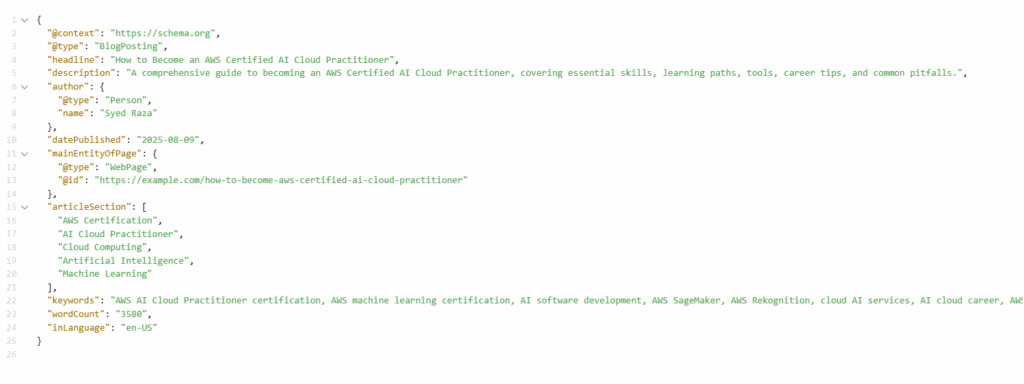
Here is the Schema
For more insights, visit the ClayDesk Blog: https://blog.claydesk.com