
AI Fundamentals: A Beginner’s Guide to AI and ML
AI Fundamentals
Artificial Intelligence, once a futuristic fantasy, is now a daily reality. From unlocking smartphones with facial recognition to getting instant recommendations on Netflix or Spotify, AI is already embedded in our lives. Yet, most people still don’t understand what AI truly is, how it works, or why it matters so much in today’s world. This guide will unpack AI fundamentals in a simple, conversational way—covering everything from basic concepts to real-world applications, ethical concerns, and future trends. Whether you’re a tech-savvy student or a curious business leader, you’ll find clarity and insight here.AI Fundamentals: A Beginner’s Guide to AI and ML.
What is Artificial Intelligence? Understanding the Core Definition
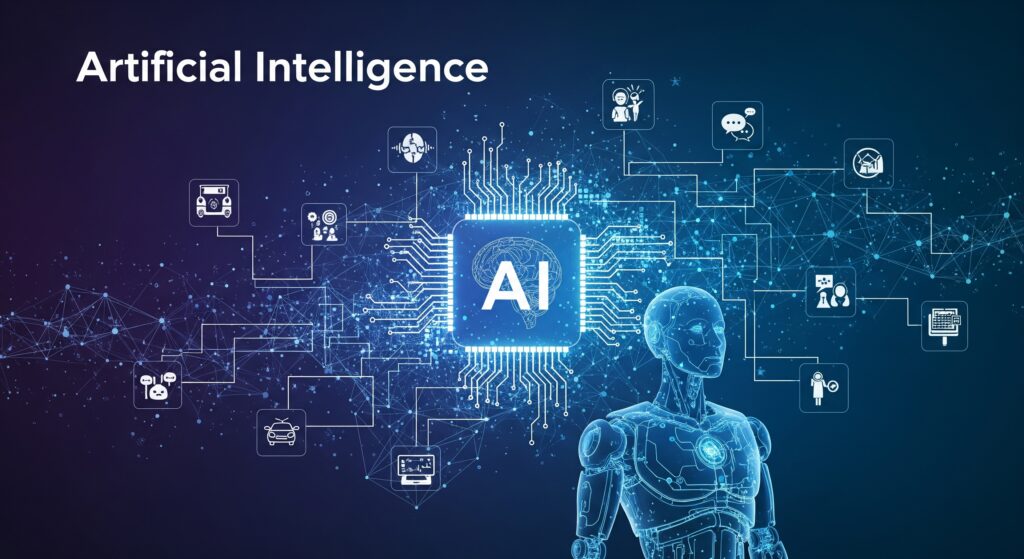
Artificial Intelligence refers to the capability of machines to imitate intelligent human behaviour. In other words, AI allows computers and systems to think, learn, and make decisions. These systems use data, algorithms, and patterns to solve problems, just like humans do.
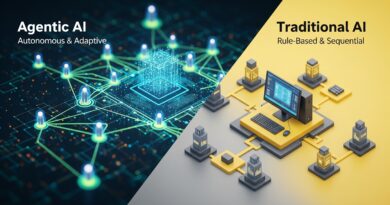
Unlike traditional programs that follow strict rules, AI learns and adapts over time. For example, when you type a search in Google, the engine uses AI to predict what you’re looking for—even before you finish typing. So, instead of reacting passively, AI systems continuously improve based on new data.
A Brief History of AI: From Concept to Everyday Use
The idea of intelligent machines dates back centuries, but AI research officially began in the 1950s. Alan Turing, a British mathematician, posed the famous question: “Can machines think?” This led to the Turing Test, which evaluates a machine’s ability to exhibit human-like intelligence.
In the 1960s and 1970s, early AI focused on symbolic reasoning and logic-based systems. However, progress slowed due to limited computing power. During the 1980s and 1990s, neural networks and machine learning gained traction. These models allowed computers to learn from data instead of being manually programmed.
The AI boom we see today is largely due to big data, cloud computing, and advanced algorithms. Companies like Google, Apple, and Amazon now integrate AI into search engines, virtual assistants, and smart home devices.
Key Types of Artificial Intelligence
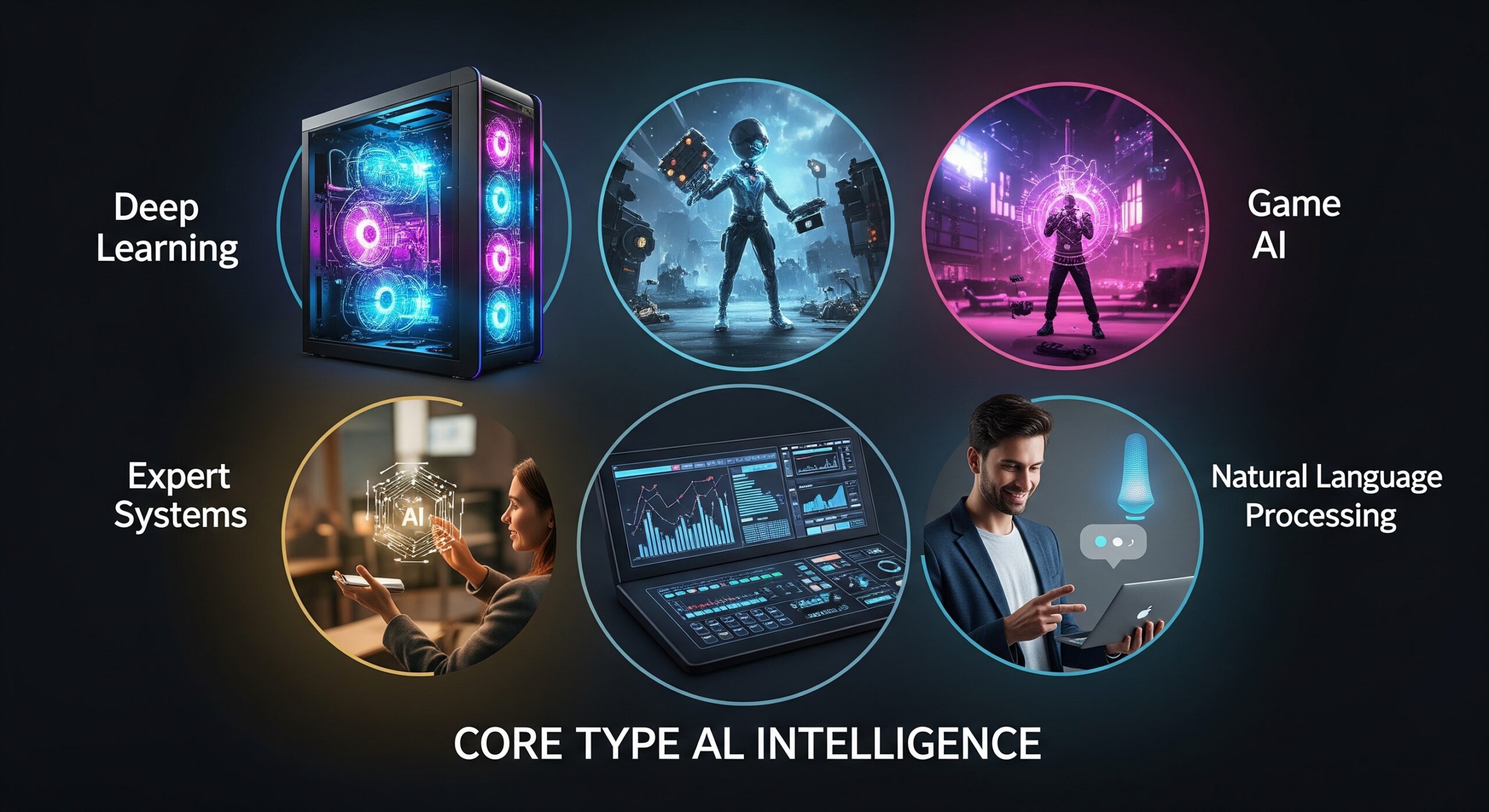
AI isn’t just one thing. It branches into several types, each serving unique functions. Let’s explore them:
Narrow AI: Smart But Limited
Also called Weak AI, Narrow AI is designed to perform a single task. Siri, Google Maps, and Amazon recommendations are all examples of Narrow AI. They excel at specific functions but can’t adapt to other tasks outside their training.
General AI: Human-Like Thinking
General AI, or Strong AI, is still theoretical. It refers to systems that possess human-level cognitive abilities. These systems could reason, learn, and adapt across various tasks—just like a real person. Achieving this level of AI is a major goal for researchers, but we’re not there yet.
Super intelligent AI: Beyond Human Capabilities
Superintelligence represents AI that surpasses human intelligence in every aspect. It’s the stuff of sci-fi movies and ethical debates. While we’re far from building such machines, the implications are widely discussed in academic and policy circles.
Machine Learning: The Engine Behind AI Systems
AI Fundamentals: A Beginner’s Guide to AI and ML. Machine Learning (ML) is a subset of AI that trains systems to learn from data and improve over time without explicit programming. For example, email filters that learn to identify spam based on user behaviour use machine learning models.
ML uses algorithms to identify patterns in data, make predictions, and adjust based on new information. It’s divided into three main categories:
Supervised Learning
In supervised learning, the model is trained on labeled data. It knows the correct output and learns to map input to output. Spam detection and credit scoring are prime examples.
Unsupervised Learning
This approach works with unlabeled data. The system identifies hidden patterns and relationships without being told what to look for. It’s commonly used in customer segmentation and market research.
Reinforcement Learning
Here, the AI learns by trial and error. It receives rewards or penalties based on its actions. Think of it like training a pet—successful behaviors are reinforced while wrong actions are discouraged. This method powers game-playing AIs like AlphaGo.
Deep Learning: Diving Deeper into Neural Networks
Deep Learning is a more advanced form of machine learning that mimics the structure of the human brain through artificial neural networks. These models contain layers of interconnected nodes that process data in increasingly complex ways.
Applications include facial recognition, natural language processing, and autonomous driving. For instance, Tesla’s self-driving features rely on deep learning to identify road signs, other vehicles, and pedestrians.
The success of deep learning depends heavily on data. The more data a model receives, the better it performs. That’s why tech giants with massive data pools often lead the AI race.
Natural Language Processing: Teaching Machines to Understand Humans
AI Fundamentals: A Beginner’s Guide to AI and ML. Natural Language Processing (NLP) allows computers to understand, interpret, and generate human language. From chatbots to real-time translation apps, NLP is behind many tools you use daily.
Voice assistants like Alexa and Google Assistant use NLP to turn speech into structured data. Additionally, NLP powers sentiment analysis, enabling companies to gauge public opinions from social media posts, reviews, or surveys.
As NLP improves, it bridges the communication gap between humans and machines—making interactions smoother and more intuitive.
Computer Vision: Teaching Machines to See the World
Computer Vision enables AI to interpret visual information from the world. It mimics human sight, allowing machines to recognize images, faces, and objects.
Retail stores use computer vision for inventory tracking. Meanwhile, social media platforms employ it to tag people in photos automatically. In healthcare, it helps detect abnormalities in X-rays and MRIs.
This area of AI often works hand in hand with deep learning, particularly convolutional neural networks (CNNs), to identify visual patterns and enhance accuracy.
AI in Real-World Applications: Industries and Use Cases
AI is transforming almost every industry. Let’s look at how it’s making an impact.
Healthcare
AI aids in diagnosing diseases, personalizing treatments, and speeding up drug discovery. Predictive models help detect conditions like cancer or heart disease early, improving patient outcomes significantly.
Finance
AI automates fraud detection, credit scoring, and stock trading. Robo-advisors now offer personalized investment plans with minimal human input.
Retail
From customer service chatbots to dynamic pricing and personalized marketing, AI enhances the shopping experience. Major retailers analyze consumer behavior to optimize inventory and pricing strategies.
Manufacturing
AI improves operational efficiency through predictive maintenance, quality control, and robotics. Smart factories use sensors and AI to minimize downtime and streamline production.
Education
Personalized learning platforms powered by AI adapt to students’ learning styles. Virtual tutors and automated grading also ease the burden on teachers.
The Ethics of Artificial Intelligence: Challenges We Must Address
As AI grows more powerful, ethical concerns multiply. It’s essential to address them before these technologies become too deeply embedded.
Data Privacy
AI relies heavily on data, often personal. How that data is collected, stored, and used must be transparent. Otherwise, it could lead to serious privacy violations.
Bias and Fairness
Algorithms can inherit human biases if the training data is skewed. This can lead to unfair outcomes, particularly in hiring, policing, or lending.
Job Displacement
Automation through AI could replace millions of jobs. While it creates new roles, reskilling and workforce transition remain major challenges.
Accountability
When AI systems fail—like misdiagnosing an illness or crashing a self-driving car—who is responsible? Establishing legal accountability is still a gray area.
The Future of AI: Trends to Watch Closely
AI continues to evolve rapidly. Staying informed about emerging trends helps individuals and businesses prepare for what’s next.
Explainable AI (XAI)
Black-box models make decisions that are often hard to understand. XAI aims to make those decisions transparent and interpretable.
Edge AI
Instead of relying on cloud servers, Edge AI processes data locally on devices. This improves response time and protects user privacy.
AI and IoT
Combining AI with the Internet of Things (IoT) creates smart ecosystems—like connected homes, cities, and factories. These systems can self-monitor and optimize performance in real time.
Generative AI
Tools like ChatGPT and MidJourney showcase how AI can create original content—text, images, and even music. This field is reshaping marketing, content creation, and entertainment.
AI Regulation
Governments are beginning to draft regulations to manage AI’s growth responsibly. From data governance to ethical use, these laws will shape the future of innovation.
How to Learn AI: Building Skills in an AI-Driven World
Whether you’re a student, entrepreneur, or professional, understanding AI is becoming a must-have skill. Fortunately, learning AI is more accessible than ever.
Start with foundational topics like Python programming, statistics, and linear algebra. Online platforms like Coursera, edX, and Udacity offer beginner to advanced courses in machine learning and deep learning.
Practice through projects. Build a simple chatbot or prediction model using open-source tools like TensorFlow or Scikit-Learn. Real-world experience helps deepen understanding and boosts confidence.
Community matters too. Join AI forums, attend webinars, and collaborate on GitHub projects. The more you engage, the more you’ll learn.
AI for Business: Strategy, Implementation, and ROI
Organizations across the globe are investing in AI to stay competitive. However, adopting AI isn’t just about installing new software—it requires a strategy.
First, identify business problems where AI could deliver value. Whether it’s automating workflows or enhancing customer service, clarity is crucial.
Next, ensure you have the right data infrastructure. Clean, well-organized data fuels effective AI.
Then, build or buy the right tools. Open-source platforms can be cost-effective, but managed services may offer quicker results for non-tech teams.
Measure ROI consistently. AI should enhance productivity, reduce costs, or improve customer experience. Otherwise, it’s not worth the investment.
Conclusion: Embrace AI with Knowledge and Responsibility
Artificial Intelligence is no longer an optional skill or future concept. It’s a reality shaping how we live, work, and connect. Understanding its fundamentals empowers you to navigate this transformation with confidence.AI Fundamentals: A Beginner’s Guide to AI and ML.
By grasping the basics—like machine learning, NLP, and ethical challenges—you gain a solid foundation to build on. The key is continuous learning, ethical awareness, and strategic action.
Whether you’re a business owner, a developer, or a lifelong learner, embracing AI will future-proof your career and unlock new opportunities.
For more insights, visit the ClayDesk Blog: https://blog.claydesk.com