

Staying Updated with AI Model Changes
Staying Updated with AI Model Changes. Artificial Intelligence (AI) is evolving at an unprecedented pace, with new models, frameworks, and methodologies emerging regularly. For developers, data scientists, and AI enthusiasts, staying abreast of these changes is not just beneficial—it’s essential. This guide delves into effective strategies for keeping up with AI model updates, ensuring that you remain at the forefront of this dynamic field.
Understanding Different Types of AI Model Updates
AI model changes are not limited to just new versions. Updates can involve architecture improvements, fine-tuning, dataset expansions, or even deployment optimizations. For instance, a vision model might receive updates to handle higher-resolution images, while a language model could integrate domain-specific knowledge. Recognizing these differences helps developers prioritize which updates matter most to their projects.
The Importance of Staying Updated in AI
In the realm of AI, change is the only constant. New models often outperform their predecessors, offering enhanced capabilities, efficiency, and accuracy. For instance, the transition from GPT-3 to GPT-4 brought significant improvements in natural language understanding and generation. Similarly, advancements in computer vision models have led to more precise image recognition and processing.
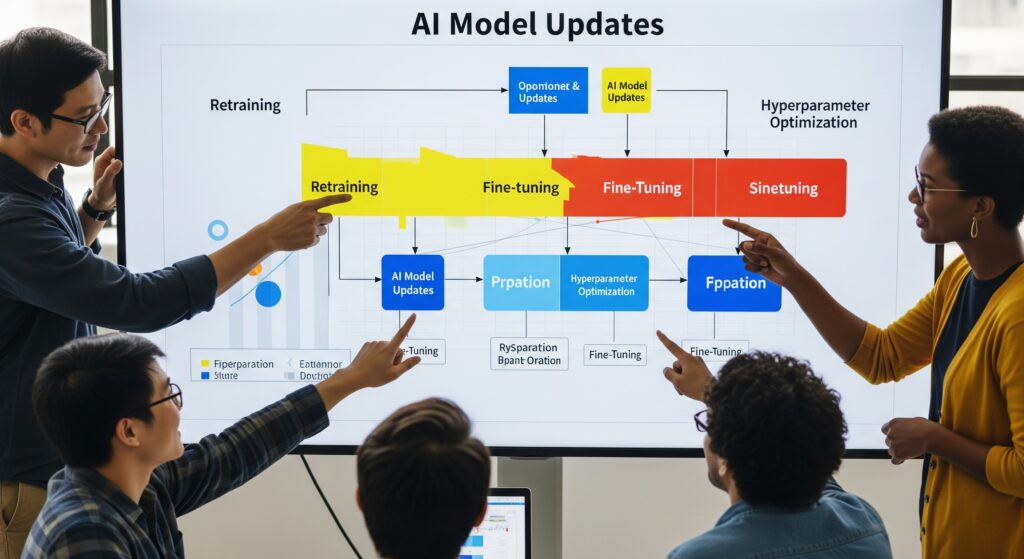
Staying Updated with AI Model Changes. Being informed about these developments allows professionals to leverage the latest technologies, optimize their projects, and maintain a competitive edge. Moreover, understanding the nuances of new models can aid in troubleshooting, customization, and integration tasks.
Monitoring AI Research Publications and Journals
Beyond newsletters, academic research is a primary source of cutting-edge advancements. Journals like the Journal of Artificial Intelligence Research (JAIR) or IEEE Transactions on Neural Networks provide detailed studies on emerging models. Monitoring these sources and reading papers critically allows professionals to anticipate trends before they reach mainstream frameworks.
Leveraging AI Experiment Tracking and Versioning Tools
Experiment tracking platforms like MLflow or Weights & Biases allow developers to monitor model performance across updates. These tools help compare previous and current model versions, visualize changes, and maintain reproducibility. Using version control for datasets and model code also ensures that updates do not break existing pipelines.
Integrating AI Model Updates into Production Pipelines
Staying updated is only useful if changes are effectively applied. Developers must design deployment strategies that allow safe integration of new models. Techniques like A/B testing, gradual rollouts, or sandbox environments let teams validate updates before full-scale deployment. This reduces risks and ensures that improvements enhance performance without disrupting existing systems.
Real-World Examples of AI Model Evolution
Consider OpenAI’s GPT series. GPT-3 revolutionized natural language understanding, but GPT-4 expanded contextual comprehension and reasoning abilities. Similarly, image recognition models like ResNet and EfficientNet have evolved to offer higher accuracy and efficiency. Studying such case studies provides concrete insights into how updates impact real-world applications.
Challenges in Keeping Up with AI Developments
The rapid pace of AI advancements presents several challenges:
- Information Overload: With a plethora of research papers, blog posts, and news articles published daily, it can be overwhelming to discern valuable information from the noise.
- Technical Jargon: AI literature is often laden with complex terminology and concepts, making it difficult for those not deeply entrenched in the field to grasp.
- Resource Constraints: Allocating time and resources to continuously learn about new models can be challenging, especially for professionals balancing multiple responsibilities.
Despite these challenges, adopting structured approaches can make staying updated more manageable.
Effective Strategies to Stay Informed
1. Subscribe to AI-Focused Newsletters
Newsletters curated by AI experts can serve as a valuable resource for staying informed. These newsletters often summarize the latest research, model releases, and industry trends, saving you time and effort. Some notable AI newsletters include:
- The Batch by Andrew Ng
- Import AI by Jack Clark
- The Algorithm by MIT Technology Review
By subscribing to these newsletters, you can receive regular updates directly in your inbox, ensuring you don’t miss significant developments.
2. Engage with AI Communities and Forums
Participating in AI communities allows you to engage in discussions, ask questions, and share insights. Platforms like Reddit’s r/MachineLearning, Stack Overflow, and AI-focused Discord servers are hubs for knowledge exchange. These communities often discuss recent model changes, share tutorials, and provide support for troubleshooting.
Active participation can also lead to networking opportunities and collaborations, further enhancing your understanding of AI advancements.
3. Attend Webinars, Conferences, and Workshops
Attending industry events provides firsthand exposure to the latest AI research and developments. Conferences like NeurIPS, CVPR, and ICML feature presentations from leading researchers and practitioners. Workshops and webinars offer more interactive settings to delve deeper into specific topics.
These events not only provide knowledge but also foster connections with peers and experts in the field.
4. Follow AI Thought Leaders on Social Media
Social media platforms, particularly Twitter and LinkedIn, are valuable for real-time updates. Many AI researchers and organizations share their latest work, thoughts, and discussions on these platforms. Following individuals like Yann LeCun, Geoffrey Hinton, and organizations like OpenAI and DeepMind can keep you informed about cutting-edge developments.
Engaging with these posts through comments and discussions can also deepen your understanding and provide diverse perspectives.
5. Utilize AI Model Documentation and Release Notes
When integrating new AI models into your projects, always refer to the official documentation and release notes. These resources provide detailed information about model capabilities, limitations, and updates. For example, OpenAI’s API documentation offers insights into the functionalities of models like GPT-4 and Codex, including usage guidelines and best practices.
Regularly reviewing these documents ensures you are aware of any changes or enhancements that may impact your applications.
6. Experiment with New Models and Tools
Hands-on experience is one of the most effective ways to understand new AI models. Platforms like Hugging Face and TensorFlow Hub offer access to a variety of pre-trained models. By experimenting with these models, you can assess their performance, understand their strengths and weaknesses, and determine their suitability for your projects.
Building small projects or contributing to open-source initiatives can also provide practical insights into the application of new models.
7. Collaborate with Peers and Mentors
Collaborating with colleagues or mentors can provide guidance and accelerate learning. Regular discussions about recent developments, sharing resources, and working on joint projects can enhance your understanding and keep you updated. Mentors, in particular, can offer valuable insights based on their experience and expertise.
Tools and Platforms to Aid in Staying Updated
Staying Updated with AI Model Changes. Several tools and platforms can assist in tracking AI model changes:

- ArXiv Sanity Preserver: A tool that helps in filtering and discovering relevant research papers from arXiv.
- Papers with Code: A platform that links research papers with their corresponding code implementations, allowing for easy replication and experimentation.
- GitHub: Many AI projects and models are hosted on GitHub, where you can track updates, contribute to discussions, and collaborate with developers worldwide.
- Google Scholar Alerts: Setting up alerts for specific keywords or authors can notify you about new publications in your areas of interest.
By leveraging these tools, you can streamline the process of staying informed and engaged with the latest AI developments.
The Future of AI Model Updates
Looking ahead, the landscape of AI model updates is poised to evolve further:
- Increased Collaboration: Open-source initiatives and collaborations between organizations are expected to accelerate the development and dissemination of new models.
- Standardization: Efforts towards standardizing AI protocols and frameworks will facilitate interoperability and ease of integration.
- Ethical Considerations: As AI models become more pervasive, ethical considerations regarding fairness, transparency, and accountability will gain prominence.
Staying updated with these trends will be crucial for professionals aiming to navigate the future of AI effectively.
Conclusion
Staying updated with AI model changes is a continuous journey that requires proactive engagement, curiosity, and adaptability. By subscribing to newsletters, participating in communities, attending events, and hands-on experimentation, you can remain informed and effectively integrate new models into your work. Embracing these strategies will not only enhance your skills but also position you at the forefront of AI innovation.
For more insights, visit the ClayDesk Blog: https://blog.claydesk.com