How Continuous Advances in AI & Automation Are Shaping the Future
Introduction
Continuous Advances in AI & Automation: Artificial intelligence and automation are no longer futuristic buzzwords. They have become central forces reshaping global industries, workforces, and societies. Over the past few decades, technology has steadily advanced, but the pace of innovation in machine learning, robotics, natural language processing, and intelligent automation has reached a tipping point. Today, organizations that harness these capabilities are not just achieving efficiency; they are reinventing how business and life function. This transformation is not confined to tech-driven enterprises; it reaches into healthcare, education, finance, government, and even the arts.
The significance of this shift lies in its continuity. Unlike earlier industrial revolutions that unfolded in waves, the current era is defined by constant, incremental breakthroughs. New algorithms, improved hardware, and expanded data availability fuel an ecosystem where innovation never pauses. Each advancement compounds the previous, enabling systems to become more adaptive, predictive, and human-like. This ongoing cycle creates both unprecedented opportunities and equally serious ethical, economic, and cultural questions.
As we explore the evolution of artificial intelligence and automation, the impact on industries, and the way society is adapting, one thing becomes clear: the future is not arriving someday — it is being shaped continuously by the advances happening now. Understanding this process is essential not only for organizations seeking to thrive but also for individuals navigating careers, governments regulating technologies, and communities redefining values. The trajectory of AI-powered automation reveals more than tools; it illustrates how human potential itself is being reimagined in the twenty-first century.

The Evolution of AI and Automation
Continuous Advances in AI & Automation: Artificial intelligence traces its roots to early computing experiments in the mid-20th century, when researchers dreamed of machines capable of reasoning. However, progress remained slow due to limited computational power and scarce data. Automation, on the other hand, advanced more quickly in physical industries. Assembly lines, industrial robots, and mechanical systems transformed factories, but they operated under rigid, pre-programmed instructions.
The turning point arrived in the late 1990s and early 2000s, when machine learning algorithms began to outperform traditional rule-based systems. The rise of big data gave AI the raw material it needed to learn patterns at scale. Deep learning, inspired by neural networks, pushed the boundaries even further by enabling systems to recognize images, understand speech, and process natural language with remarkable accuracy. These milestones redefined what automation meant. Instead of machines simply executing repetitive tasks, AI-driven automation allowed systems to adapt, predict, and even anticipate needs.
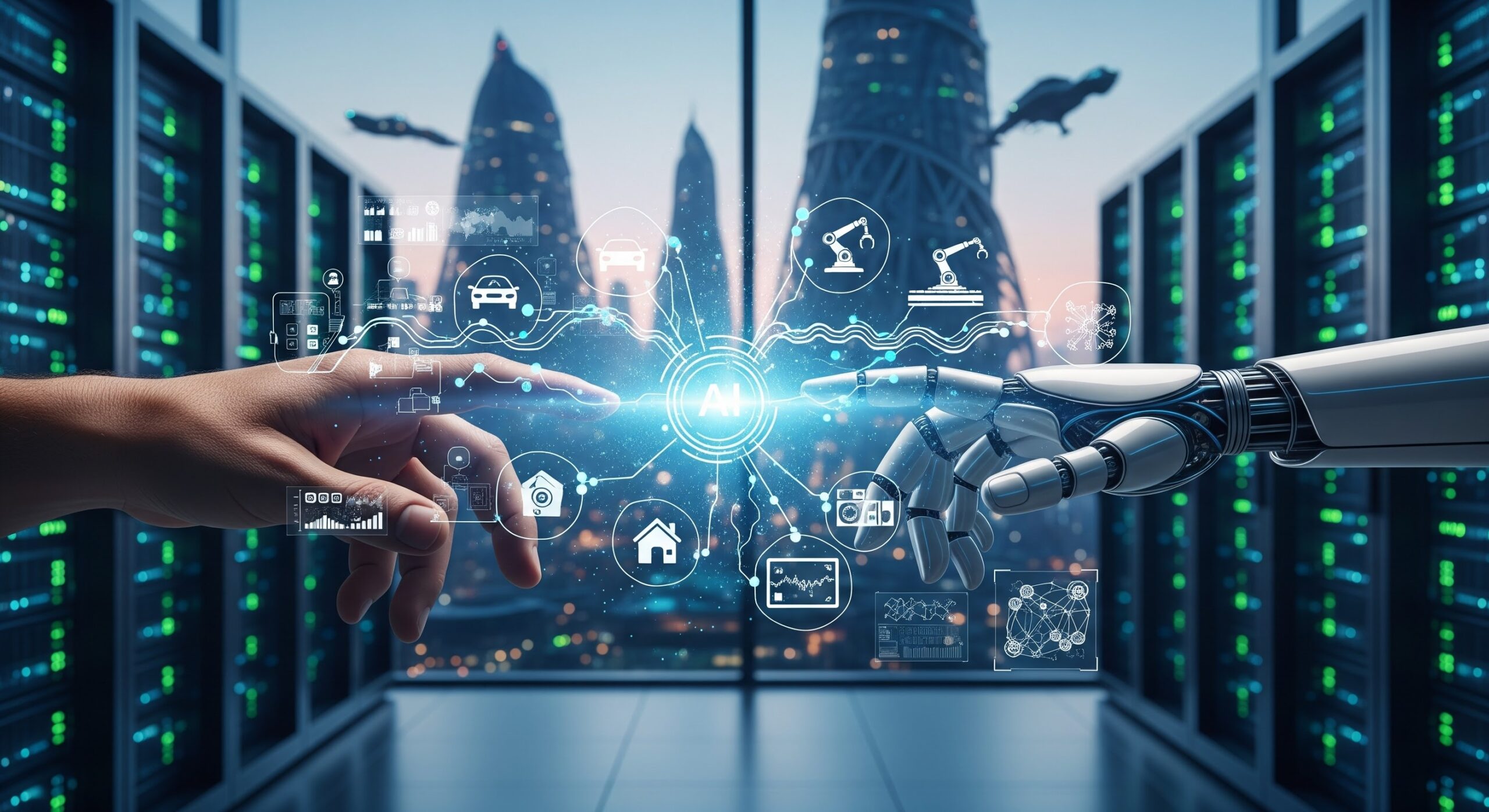
A key driver of this evolution has been the integration of robotics with intelligent algorithms. Robots no longer merely follow fixed routines. They collaborate with humans in warehouses, assist in surgeries, and navigate complex environments like city streets. Paired with automation platforms, these robots become extensions of intelligent decision-making systems.
Another critical element is the Internet of Things (IoT), which allows devices to collect and exchange data in real time. Automation powered by IoT sensors creates environments where machines monitor themselves, optimize performance, and prevent breakdowns before they occur. This convergence of AI, robotics, and IoT has set the stage for autonomous systems that transform entire industries.
The acceleration continues as computational power expands through cloud infrastructure, edge computing, and quantum research. Each leap reduces the time required to train algorithms, broadens the scope of applications, and lowers costs. The evolution of AI and automation is not a single event but a perpetual motion machine, constantly reshaping the landscape of possibility.
Transforming Global Industries
The reach of AI-driven automation spans nearly every sector. Its versatility lies in its ability to enhance both physical and cognitive tasks, fundamentally altering workflows, customer experiences, and business models.
Healthcare
Continuous Advances in AI & Automation: In healthcare, AI enables earlier disease detection, personalized treatment, and improved patient outcomes. Automated diagnostic tools analyze medical images faster and often more accurately than human specialists. For instance, AI-powered imaging systems can identify subtle patterns in CT scans that point to early signs of lung cancer. Meanwhile, robotic surgical systems allow physicians to perform procedures with greater precision, reducing recovery times. Automation also streamlines administrative tasks, from patient scheduling to billing, freeing medical professionals to focus more on direct care.
Finance
Financial institutions rely heavily on predictive algorithms for fraud detection, algorithmic trading, and credit scoring. Automation enhances compliance by scanning thousands of regulatory documents in seconds, a task impossible for humans at scale. Robo-advisors personalize investment strategies, making wealth management more accessible. At the same time, chatbots handle millions of customer service interactions, reducing wait times while increasing satisfaction.
Manufacturing
In manufacturing, the shift from traditional assembly lines to smart factories demonstrates how AI transforms production. Intelligent robots adapt to new tasks without reprogramming, while predictive maintenance systems monitor machinery, reducing downtime. Supply chain automation predicts demand fluctuations, optimizing inventory and logistics. This agility ensures competitiveness in global markets where consumer preferences shift rapidly.
Retail
Retailers deploy automation to optimize everything from inventory to customer personalization. Recommendation engines suggest products tailored to each shopper, increasing sales while improving user experience. Automated warehouses operated by AI-powered robots process orders in minutes, accelerating delivery. Virtual assistants guide consumers through online purchases, while in-store sensors track shopping patterns to improve layout and promotions.
Education
The education sector benefits from adaptive learning platforms that customize lesson plans to individual student needs. Automation helps teachers grade assignments, freeing time for mentorship. Virtual classrooms powered by AI create interactive experiences that transcend geographical boundaries. These technologies provide personalized support, ensuring students at different skill levels receive appropriate challenges.
Transportation
Perhaps no industry illustrates automation’s potential more dramatically than transportation. Autonomous vehicles are reshaping logistics, with self-driving trucks poised to address driver shortages and improve supply chain efficiency. Ride-hailing platforms experiment with driverless cars, while drones deliver packages directly to customers. These advances promise safer roads, faster deliveries, and reduced environmental impact.
Government and Public Services
Governments leverage automation to improve efficiency and transparency. AI chatbots answer citizen inquiries, predictive analytics identify tax fraud, and automation speeds up bureaucratic processes. During crises, AI models forecast infection spreads, enabling targeted interventions. Automation also enhances national security by analyzing surveillance data, though this raises significant privacy concerns.
These industry-specific applications show that AI is not a niche tool but a universal enabler. It simultaneously raises productivity, enhances experiences, and creates pathways to innovation.
Workforce and Society
The societal impact of continuous AI and automation advances is profound. For workers, automation often sparks anxiety about job displacement. However, history suggests that while certain roles disappear, new ones also emerge. The difference today is the scale and speed of change.
Jobs that involve repetitive physical or cognitive tasks are most at risk. Data entry clerks, assembly line workers, and some customer service roles are already being replaced by automated systems. Yet, entirely new categories of employment have appeared, such as AI ethicists, data scientists, automation engineers, and human-machine interaction specialists. These positions require skills that blend technical expertise with creativity, problem-solving, and emotional intelligence.
For society, the rise of AI-driven automation prompts reevaluation of education systems. Lifelong learning becomes essential, as workers must continuously update their skills. Governments and corporations alike invest in reskilling and upskilling initiatives to prepare employees for future roles. Cultural adaptation is equally important. The relationship between humans and machines challenges traditional notions of work, identity, and purpose.
Automation also influences how societies address inequality. While AI promises efficiency and growth, it risks widening the gap between technologically advanced regions and those left behind. Countries and communities lacking infrastructure or digital literacy may face economic disadvantages. On the other hand, inclusive policies and global cooperation could transform AI into a tool for equitable development, bringing advanced services to underserved populations.
In everyday life, automation permeates homes and cities. Smart assistants control appliances, while urban planning relies on AI models to optimize energy use and reduce traffic congestion. These conveniences reshape expectations of modern living, embedding automation deeply into cultural practices.
Ethical and Security Considerations
Continuous Advances in AI & Automation: As automation grows more sophisticated, ethical dilemmas intensify. Fairness and transparency remain pressing issues. Algorithms trained on biased data can perpetuate or even amplify social inequities. For example, AI hiring tools may inadvertently discriminate against candidates from underrepresented groups. Transparent model design and continuous auditing are necessary to ensure ethical outcomes.
Privacy is another major concern. Automated systems rely on vast amounts of personal data, from health records to financial histories. Ensuring that this information is collected, stored, and used responsibly is essential. Breaches or misuse can erode public trust, undermining adoption.
Security challenges are equally critical. AI systems themselves can become targets for cyberattacks. Adversarial examples—subtly manipulated inputs—can trick models into making dangerous errors. Protecting these systems requires advanced cybersecurity measures, along with regulatory oversight.
Accountability also complicates the ethical landscape. When autonomous vehicles cause accidents or automated trading systems trigger financial losses, determining responsibility is complex. Policymakers grapple with creating frameworks that assign liability fairly while encouraging innovation.
Ultimately, addressing these challenges requires collaboration between technologists, policymakers, ethicists, and citizens. Only through inclusive dialogue can societies ensure that automation serves collective well-being rather than narrow interests.
Future Outlook
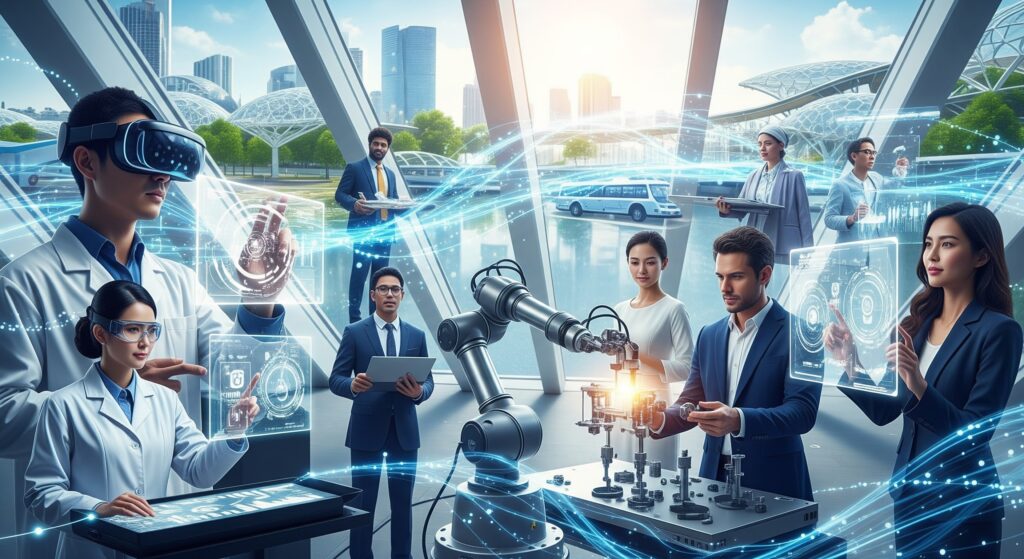
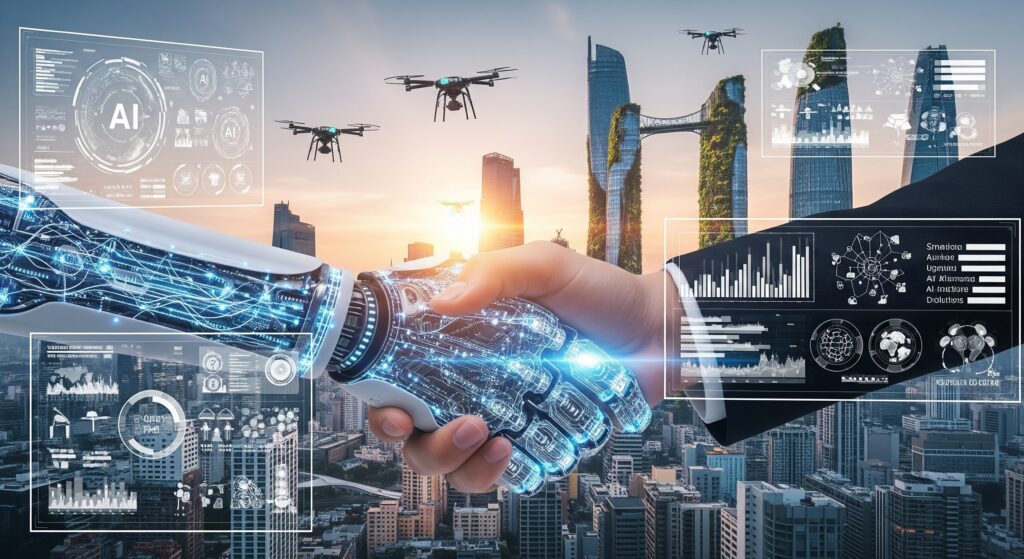
Looking forward, continuous advances in artificial intelligence and automation promise even more profound transformations. One trajectory involves increasing integration between humans and machines. Rather than replacing workers, automation will likely evolve toward collaborative intelligence, where AI augments human decision-making. In medicine, for example, doctors may rely on AI to analyze patient data but retain ultimate responsibility for diagnosis and care.
Another trend is the rise of generalized AI systems that move beyond narrow applications. While today’s AI excels at specific tasks, research into artificial general intelligence (AGI) seeks to create systems capable of reasoning across diverse domains. Though AGI remains speculative, its development could redefine the boundaries of human and machine collaboration.
At the same time, automation will drive greater sustainability efforts. AI models optimize energy consumption, design eco-friendly materials, and enable circular economies where waste is minimized. By combining technological progress with environmental responsibility, societies can pursue growth without sacrificing planetary health.
Global competition over AI leadership is another defining feature of the future. Nations invest heavily in research, infrastructure, and workforce development, viewing AI as a strategic asset. International cooperation will be vital to prevent fragmentation and ensure shared benefits.
For individuals, the future means embracing adaptability. Careers will be fluid, requiring continuous learning and the ability to work alongside evolving technologies. While uncertainty is inevitable, opportunities for creativity, innovation, and impact will expand.
Conclusion
Continuous Advances in AI & Automation: The story of AI and automation is one of constant motion. Unlike past revolutions defined by single inventions, today’s transformation emerges from a continuous stream of interconnected advances. Each breakthrough in machine learning, robotics, IoT, or natural language processing amplifies the others, creating exponential potential.
Industries from healthcare to transportation are already reshaped, while societies grapple with both opportunity and disruption. Ethical and security concerns demand vigilance, yet the promise of improved lives, sustainable growth, and expanded human potential is undeniable.
Ultimately, the future is not about machines replacing people but about redefining what it means to collaborate with technology. Continuous advances in AI and automation are shaping a world where humans and intelligent systems together can address challenges once thought insurmountable. This vision requires courage, adaptability, and shared responsibility, but it also offers an extraordinary chance to build a future more dynamic and inclusive than ever before.
For more insights, visit the ClayDesk Blog: https://blog.claydesk.com