
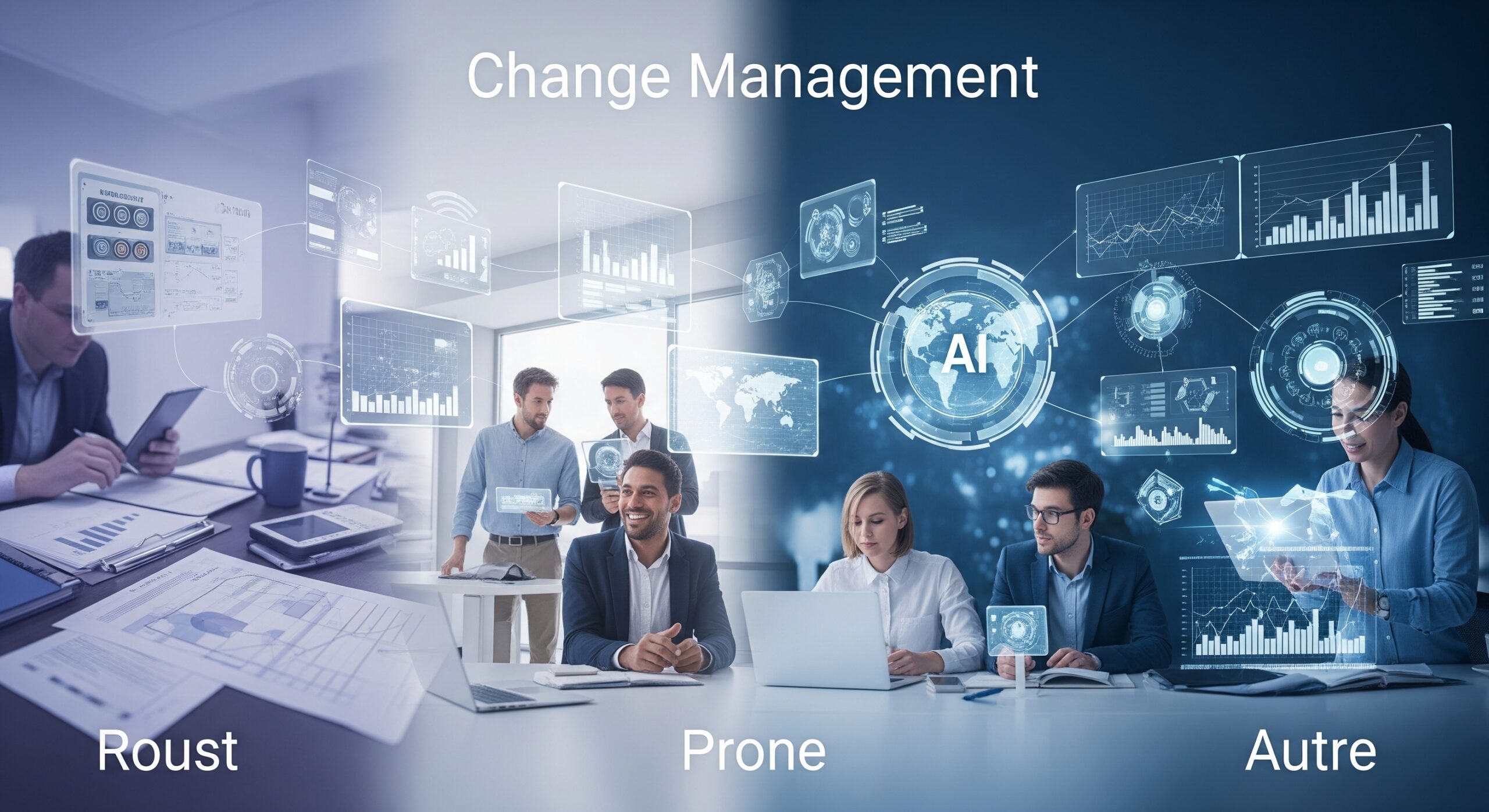
Why Change Management Needs to Adapt in the AI Era
Why Change Management Needs to Adapt in the AI Era
Why Change Management Needs to Adapt in the AI Era? .The pace of technological evolution has never been faster, and artificial intelligence (AI) is now at the forefront of organizational transformation. Companies across industries are integrating AI tools to streamline operations, improve decision-making, and drive innovation. However, this rapid adoption brings a pressing challenge: traditional change management practices are struggling to keep up. Leaders who fail to adapt their change strategies risk inefficiencies, employee resistance, and missed opportunities. In the AI era, change management is no longer a static process—it must become dynamic, continuous, and deeply integrated with technology.

Artificial intelligence is unique in how it impacts organizations. Unlike conventional tools, AI can automate complex processes, analyze vast datasets, and make predictive recommendations, fundamentally altering workflows and decision-making structures. Consequently, employees face new expectations, responsibilities, and potential disruptions in their daily work. For instance, an AI-powered customer support system can handle inquiries autonomously, changing the role of human agents from responders to analysts and problem-solvers. Without a change management strategy that addresses these shifts, organizations risk confusion, disengagement, and inefficiency.
Understanding why change management must evolve requires examining both the capabilities of AI and the traditional limitations of organizational change strategies. Classical models, while effective for incremental adjustments, are often inadequate for managing AI-driven transformations. The AI era demands adaptive frameworks, continuous learning approaches, and employee-centered strategies that foster engagement, trust, and productivity throughout transitions.
The Evolution of Change Management
Why Change Management Needs to Adapt in the AI Era? .Change management has traditionally focused on guiding people through transitions—whether implementing new processes, adopting technologies, or shifting organizational culture. Models such as Lewin’s Change Model, Kotter’s 8-Step Process, and ADKAR have provided structured methodologies to help employees adapt. These frameworks emphasize planning, communication, leadership support, and reinforcement. However, they were designed for environments where change occurs in predictable stages, often over months or even years.
In contrast, AI-driven transformation is non-linear and continuous. Machine learning systems evolve in real time, and predictive analytics can introduce unexpected insights that require immediate adjustments. As a result, organizations need change management strategies that are flexible, responsive, and capable of integrating AI tools into every stage of adoption. Traditional methods may provide a foundation, but without adaptation, they fail to address the velocity and complexity of AI-related change.
From Linear to Adaptive Change
Historically, change initiatives followed a linear progression: awareness, desire, knowledge, ability, and reinforcement. While suitable for predictable transitions, this structure cannot accommodate AI’s rapid evolution and complex implications. Employees may need to reskill or upskill repeatedly as AI tools evolve, and organizations must adjust processes continuously. For example, a finance team adopting an AI-based predictive analytics system may encounter new algorithm updates that change workflow patterns. Adaptive change management requires mechanisms to monitor progress, provide real-time guidance, and continuously reinforce learning.
Moreover, AI introduces ethical, social, and operational dimensions that traditional models rarely address. Employees must understand not only how to use AI but also how AI decisions are made, how biases are mitigated, and how responsibilities shift. Effective change management in the AI era requires addressing these dimensions comprehensively, ensuring transparency, trust, and alignment with organizational values.
AI as a Catalyst for Organizational Transformation
Why Change Management Needs to Adapt in the AI Era? .Artificial intelligence is more than a tool—it is a driver of profound organizational change. By automating routine tasks, predicting market trends, and analyzing massive datasets, AI reshapes how work gets done. For instance, in customer service, AI chatbots can manage initial inquiries, freeing human agents to focus on complex problem-solving. In manufacturing, predictive maintenance algorithms anticipate equipment failures, reducing downtime and improving efficiency. These shifts require employees to adapt, learn, and collaborate with AI systems, making change management a critical component of successful adoption.
Real-World Example: Manufacturing
A multinational manufacturing company integrated AI-powered predictive maintenance systems across its facilities. Initially, technicians resisted the change, fearing job redundancy. Traditional change management methods failed to achieve full adoption because employees did not understand how the AI worked or how it impacted their roles. By introducing AI literacy programs, interactive training modules, and real-time feedback sessions, leadership successfully reduced resistance and improved system utilization. This case underscores the need for change management strategies tailored to AI-driven transformations.
Real-World Example: Financial Services
In the financial sector, AI adoption has transformed risk assessment and decision-making. Predictive algorithms can flag potential fraud, forecast market trends, and optimize investment portfolios. However, employees often struggle to trust AI outputs without clear guidance. Organizations that integrate AI awareness sessions, transparent decision-making explanations, and continuous support achieve higher adoption rates and better outcomes. This demonstrates that change management must prioritize both technical integration and human acceptance.
Enhancing Employee Engagement in the AI Era
Why Change Management Needs to Adapt in the AI Era? .Employee resistance is a natural response to change, especially when AI disrupts familiar roles. Maintaining engagement requires transparent communication, inclusive planning, and personalized learning opportunities. Organizations can leverage AI itself to support change management by monitoring sentiment, analyzing adoption patterns, and delivering tailored guidance.
For example, AI-driven sentiment analysis can identify areas of resistance, confusion, or concern within teams. Change managers can then implement targeted interventions, such as additional training, mentorship, or process adjustments. By integrating AI analytics into change management, organizations can anticipate challenges and respond proactively, fostering trust and participation.
Training and Upskilling
AI adoption often necessitates reskilling or upskilling employees. Traditional classroom training is insufficient for the rapid pace of AI implementation. Adaptive change management incorporates microlearning, AI-curated learning paths, and interactive simulations to accelerate skill development. For instance, a logistics company introducing AI-powered route optimization software can provide employees with virtual scenarios to practice using the system, ensuring competence before live deployment. Continuous skill development is crucial for sustaining engagement and maximizing AI benefits.
Employee-Centric Communication
Effective change management also depends on how information is communicated. In the AI era, organizations must ensure that employees understand the purpose, impact, and benefits of AI tools. Interactive communication platforms, AI-powered chatbots, and real-time dashboards can keep teams informed and empowered. By creating channels for feedback and dialogue, change leaders can foster a sense of inclusion and agency, reducing anxiety and resistance.
Ethical Considerations in AI Change Management
Why Change Management Needs to Adapt in the AI Era? .AI adoption introduces ethical complexities that traditional change management frameworks seldom address. Algorithmic bias, data privacy concerns, and potential workforce displacement are prominent issues. Change managers must integrate ethical guidelines, transparent processes, and participatory approaches to mitigate these risks.
For example, when implementing AI in recruitment, employees must understand how candidate data is analyzed and how decisions are derived. Organizations that provide ethics training, scenario-based exercises, and regular audits build trust and promote responsible AI usage. By proactively addressing ethical considerations, change management ensures that AI adoption aligns with organizational values and fosters long-term acceptance.
Building Trust Through Transparency
Transparency is central to successful AI-driven change. Employees are more likely to embrace AI when they understand how systems function and how decisions are made. Change strategies should include demonstrations, interactive dashboards, and Q&A sessions to clarify AI functionality. Open communication reduces fear, enhances engagement, and establishes a culture of trust and accountability.
Leveraging AI for Change Management
Interestingly, AI can enhance the very process of change management. Predictive analytics can identify areas of potential resistance, track progress, and suggest interventions. Natural language processing can analyze employee feedback, detect sentiment shifts, and highlight emerging concerns. In this way, AI serves as both the driver of change and a supporting tool for its management.
For instance, a global retailer deploying AI in its supply chain used machine learning models to monitor adoption, identify workflow bottlenecks, and recommend targeted interventions. Managers could address concerns proactively, adjust training programs, and maintain high engagement levels. This demonstrates that AI-adapted change management is proactive, predictive, and continuously improving.
Continuous Improvement and Feedback Loops
Change in the AI era is ongoing, not episodic. Organizations must implement iterative feedback loops, real-time monitoring, and adaptive strategies to ensure lasting success. For example, healthcare organizations integrating AI diagnostic tools conduct monthly review sessions, allowing clinicians to provide feedback, report anomalies, and suggest workflow enhancements. Insights from these sessions inform both the AI systems and the change management strategy, ensuring sustained adoption and ongoing improvement.
Strategic Leadership in AI-Driven Change
Why Change Management Needs to Adapt in the AI Era? .Leadership plays a pivotal role in AI-era change management. Leaders must not only champion technology adoption but also demonstrate adaptability, empathy, and ethical conduct. By modeling engagement and transparency, leaders reinforce the organizational commitment to AI adoption and create a culture of trust.
A global technology company highlighted executive involvement as critical during AI rollout. Senior leaders participated in AI training sessions, engaged directly with teams, and communicated expectations clearly. This hands-on approach reduced uncertainty, increased adoption, and aligned AI initiatives with organizational goals. Leadership in the AI era is therefore visible, proactive, and culturally integrated.
Aligning AI Strategy with Organizational Culture
Successful AI adoption requires alignment between technology and organizational culture. Change leaders must ensure that AI initiatives reinforce company values, support employee development, and enhance productivity. By integrating AI strategy with cultural transformation efforts, organizations can maximize impact, minimize resistance, and sustain long-term change.
Measuring Success in AI Change Initiatives
Traditional metrics such as project completion or training attendance are insufficient for evaluating AI-driven change. Organizations must consider adoption rates, system utilization, employee competence, ethical compliance, and cultural alignment. AI-powered analytics can provide real-time insights into these dimensions, enabling leaders to adjust strategies and maintain momentum.
Why Change Management Needs to Adapt in the AI Era? .For example, a financial institution implementing AI fraud detection measured success not only by system accuracy but also by employee trust, adoption speed, and workflow efficiency. By tracking multiple metrics, change management addressed both technical and human factors, ensuring sustainable adoption.
Overcoming Challenges in AI Adoption
Despite careful planning, AI adoption often encounters unexpected hurdles. Resistance may arise from fear of job loss, lack of familiarity, or ethical concerns. Adaptive change management must anticipate these challenges and provide multi-layered solutions, including targeted training, mentorship, transparent communication, and incentive programs. Addressing both human and technological dimensions is essential for achieving successful, lasting change.
Future Trends in AI Change Management
Looking ahead, change management will continue to evolve alongside AI. Emerging trends include autonomous decision-support systems, predictive workforce planning, and AI-driven personalized learning. Organizations that embrace these trends and integrate AI into change management processes will gain a competitive advantage by staying agile, adaptive, and employee-focused.
For example, AI could be used to forecast skills gaps, simulate organizational restructuring scenarios, and recommend personalized development paths. By leveraging AI for predictive insights, organizations can proactively guide employees through transitions, reduce resistance, and accelerate transformation.
Conclusion
Why Change Management Needs to Adapt in the AI Era? .The AI era demands a fundamental rethinking of change management. Traditional linear approaches are insufficient to address the speed, complexity, and ethical implications of AI-driven transformation. Organizations must adopt adaptive, continuous, and employee-centric strategies that integrate AI tools, ethical frameworks, and real-time feedback mechanisms. Leaders play a critical role in modeling adaptability, fostering trust, and aligning AI initiatives with organizational culture. By embracing these principles, organizations can navigate AI adoption successfully, enhance employee engagement, and achieve sustainable transformation.
In essence, AI is not just changing workflows—it is reshaping organizational behavior, decision-making, and culture. Change management must evolve accordingly to remain relevant, effective, and strategic. The organizations that succeed in the AI era will be those that combine technological innovation with human-centric change practices, ensuring that AI adoption is both efficient and empowering.
For more insights, visit the ClayDesk Blog: https://blog.claydesk.com